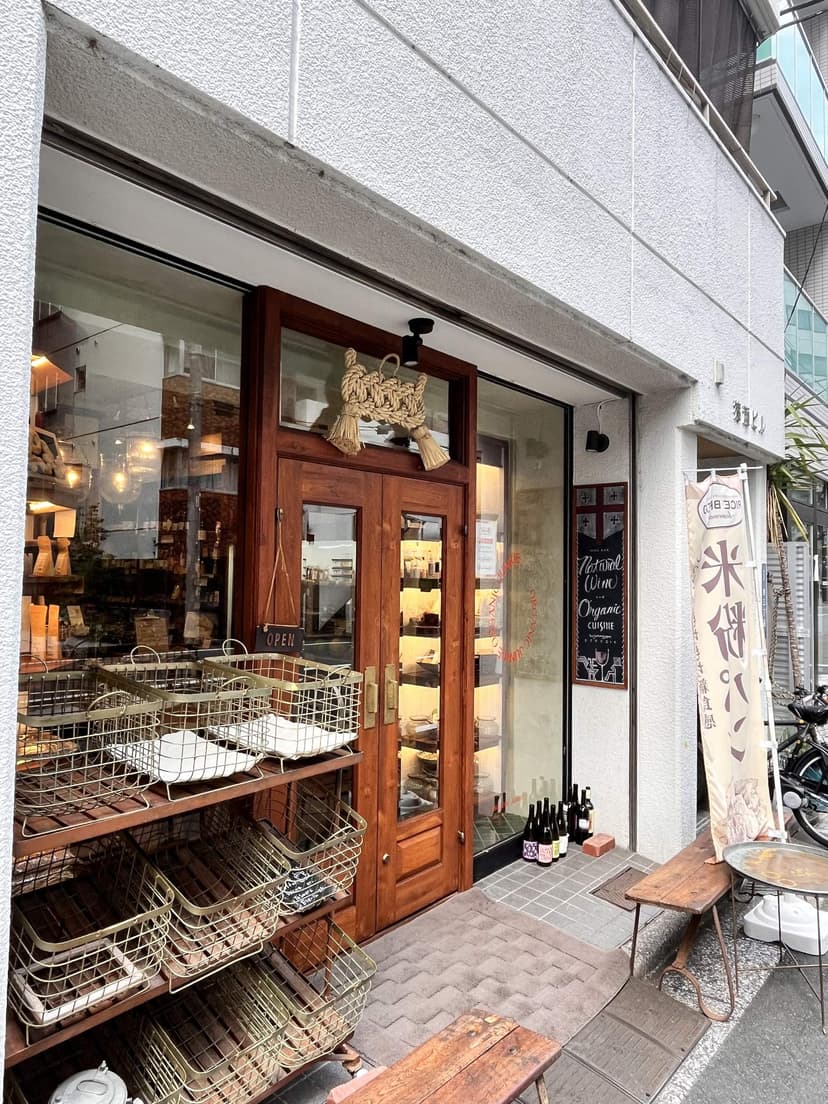
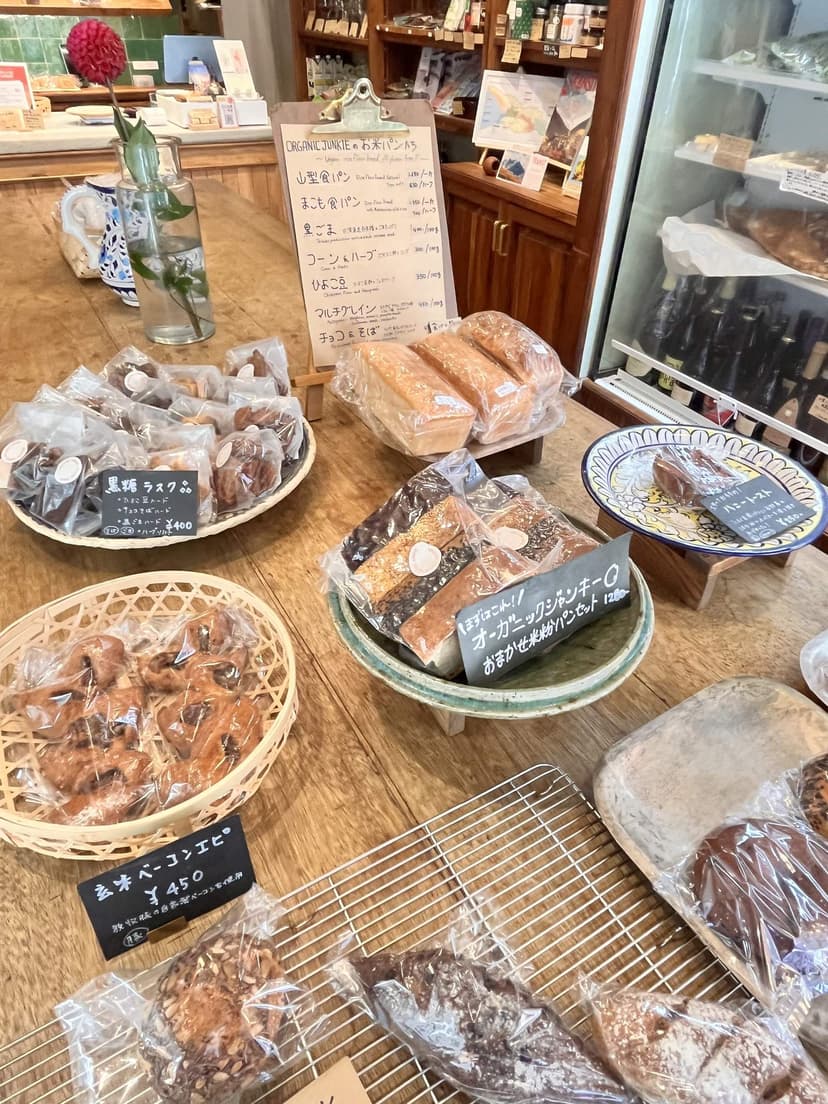
A bakery where the question "is this one gluten-free?" does not need asking is a rare thing in Tokyo. ORGANIC JUNKIE in Ebisu is one of them. Everything on the racks is made from rice and other gluten-free grains, and when we visited we were told that no wheat is brought into the shop at all.
It is small, it is takeout only, and it sells out. Those three facts shape the whole visit, so this article is mostly about what we bought, what we would do differently next time, and the freezer that makes the second visit easier than the first.
Planning a gluten-free trip to Tokyo?
See the 100+ verified spots in our Tokyo Guide →What ORGANIC JUNKIE is
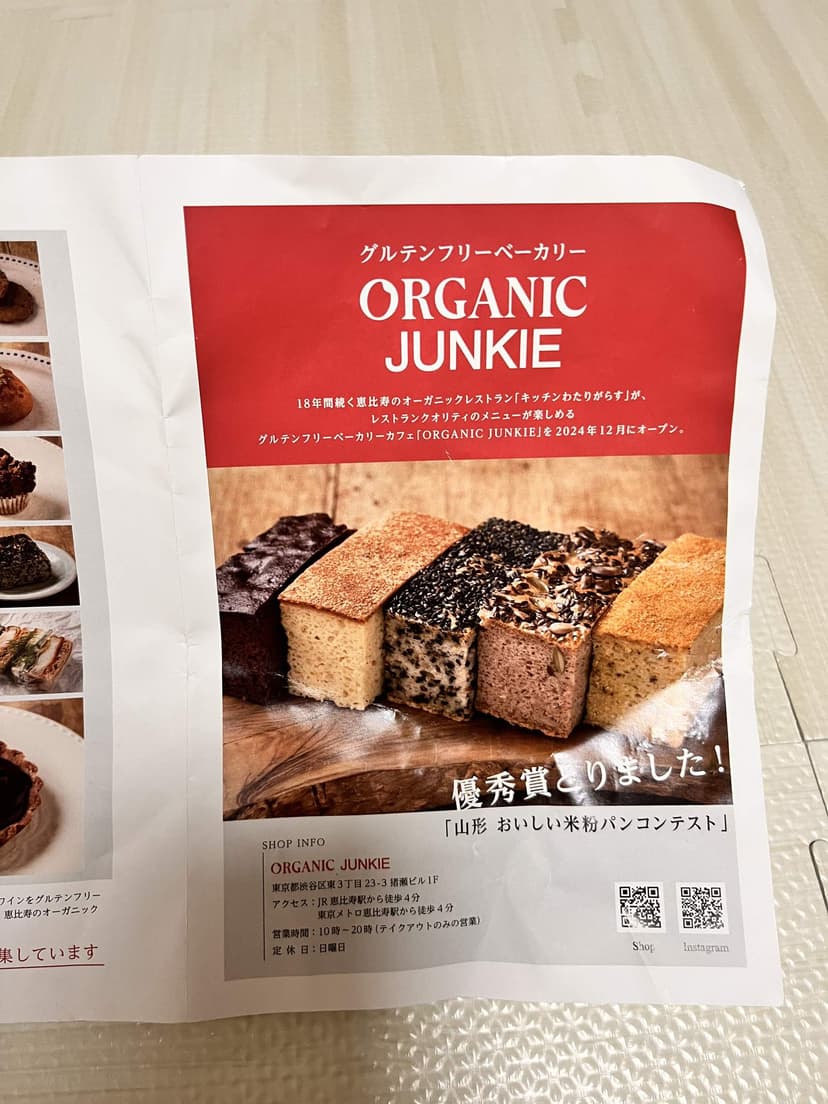
ORGANIC JUNKIE opened in December 2024. According to the leaflet we received, it comes from Kitchen Wataragarasu, an organic restaurant that has been running in Ebisu for eighteen years, and it was set up as a gluten-free bakery from the start rather than converted later.
The same leaflet is unusually specific about what goes into the bread, which is exactly what a gluten-free traveler wants to read:
- The flours are brown rice, grown organically or without pesticides, with corn, buckwheat, sorghum (takakibi) and chickpea. There is no wheat flour in that list, and no barley or oats either.
- The base dough uses no eggs, no dairy and no white sugar.
- The kitchen is organic-certified, and the leaflet lists the water, the sea salt from Aguni Island and a natural yeast the bakery cultivates itself.
- The fillings and toppings are made in house too: the leaflet says the ham, bacon, tuna, mayonnaise, ketchup and sauces used in the sandwiches are all homemade.
The leaflet also mentions that the bakery took an award at a rice-flour bread contest in Yamagata. We have not seen the contest ourselves, so we pass that along as the shop's own claim.
What we bought
We arrived at about two in the afternoon, and the racks were already thin. We were told the morning is when the full range is out. Even so, we walked out with four things.
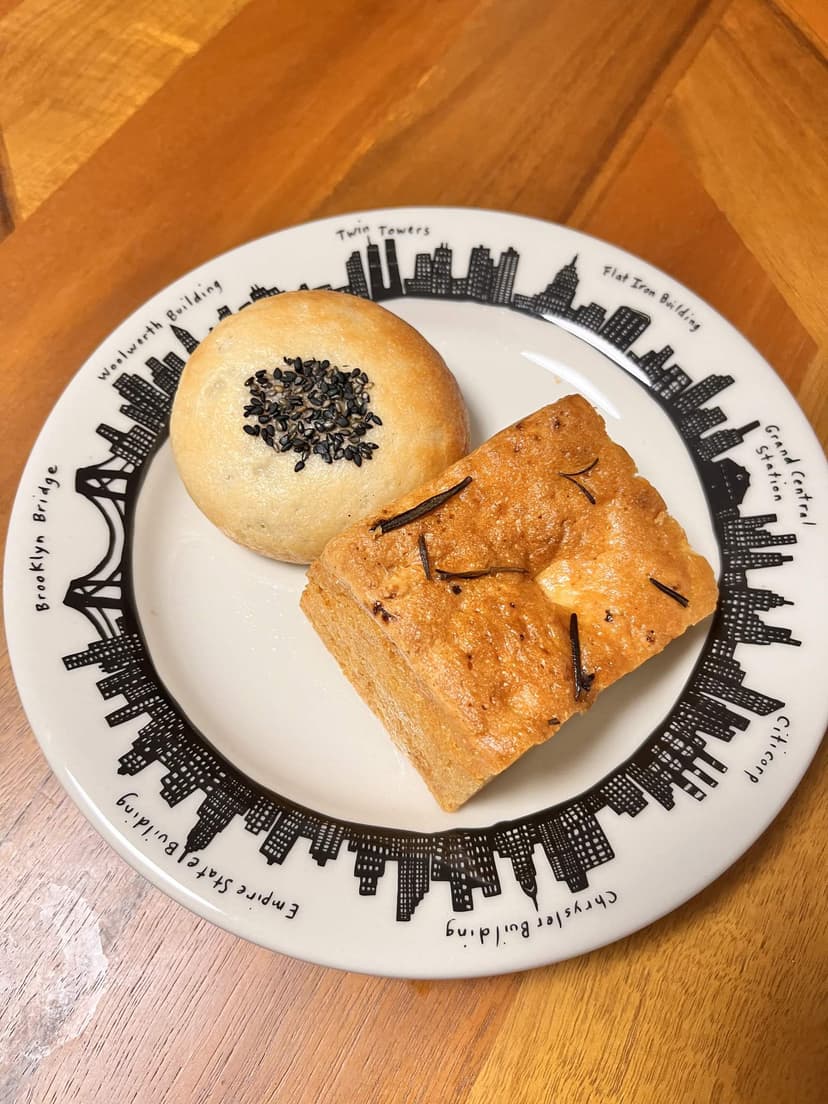
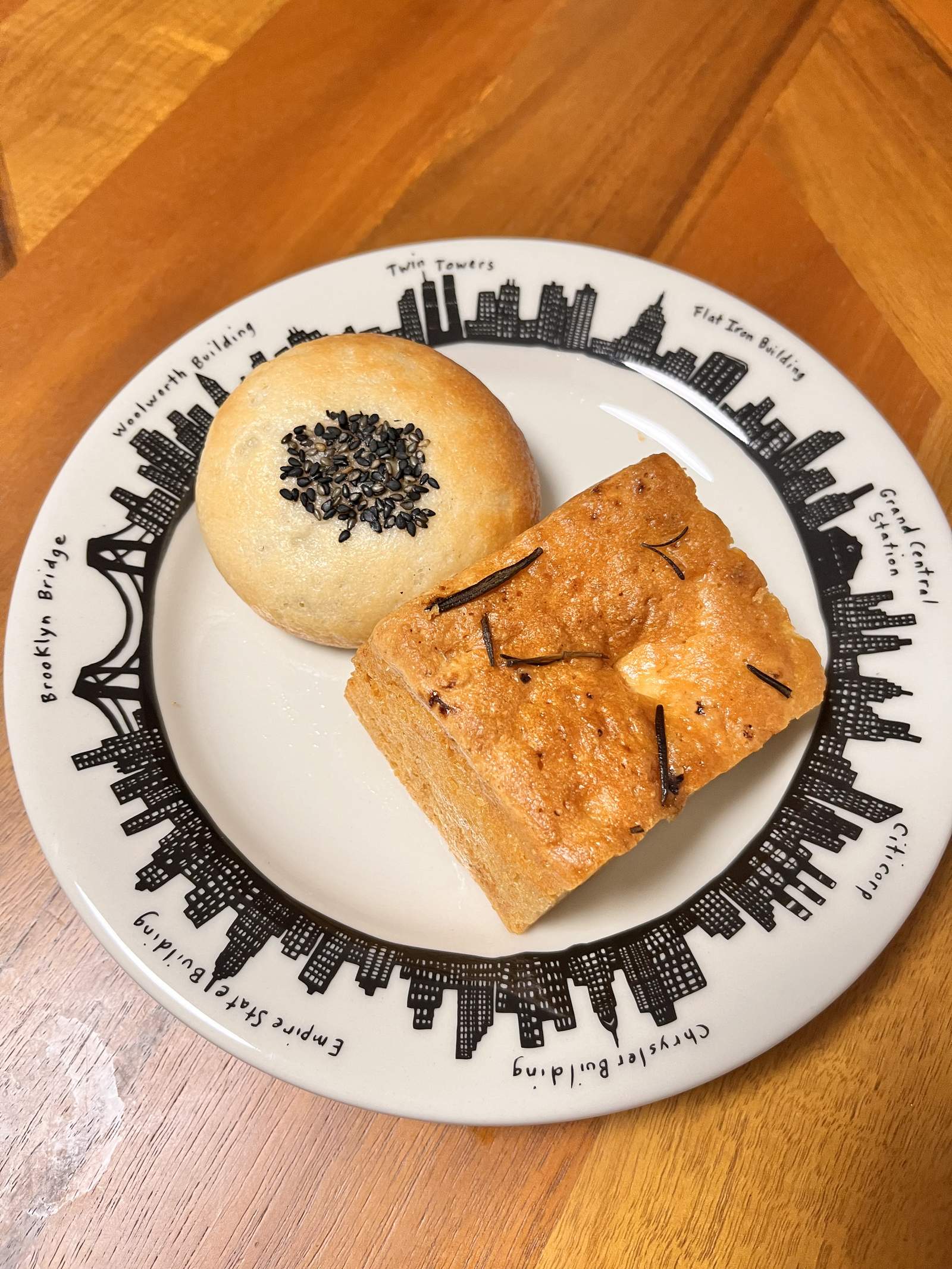
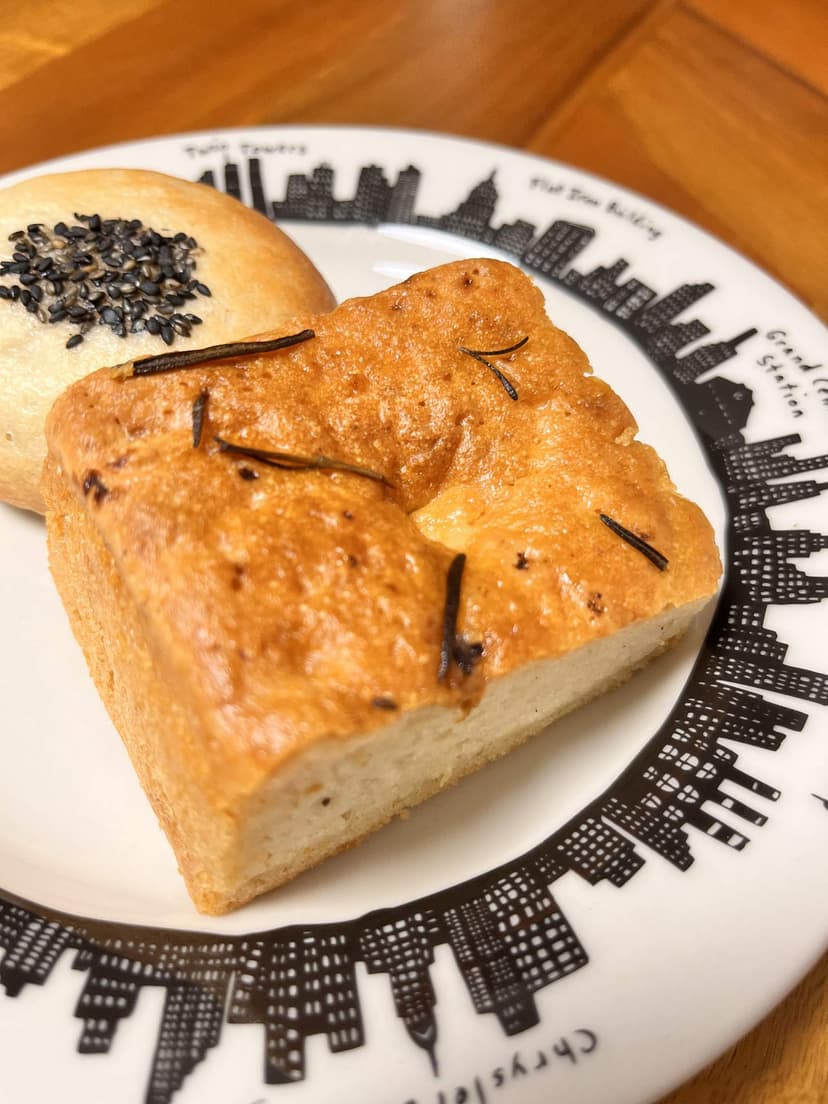
Focaccia. This was the one we would go back for. We arrived just as a tray of focaccia came out of the oven, and the shop told us they keep baking through the afternoon, so an empty rack does not mean an empty day. Potato is kneaded into the dough, there is salt on top, and the result is crisp on the outside and soft and chewy inside. It did not have the dryness that rice-flour bread often has.
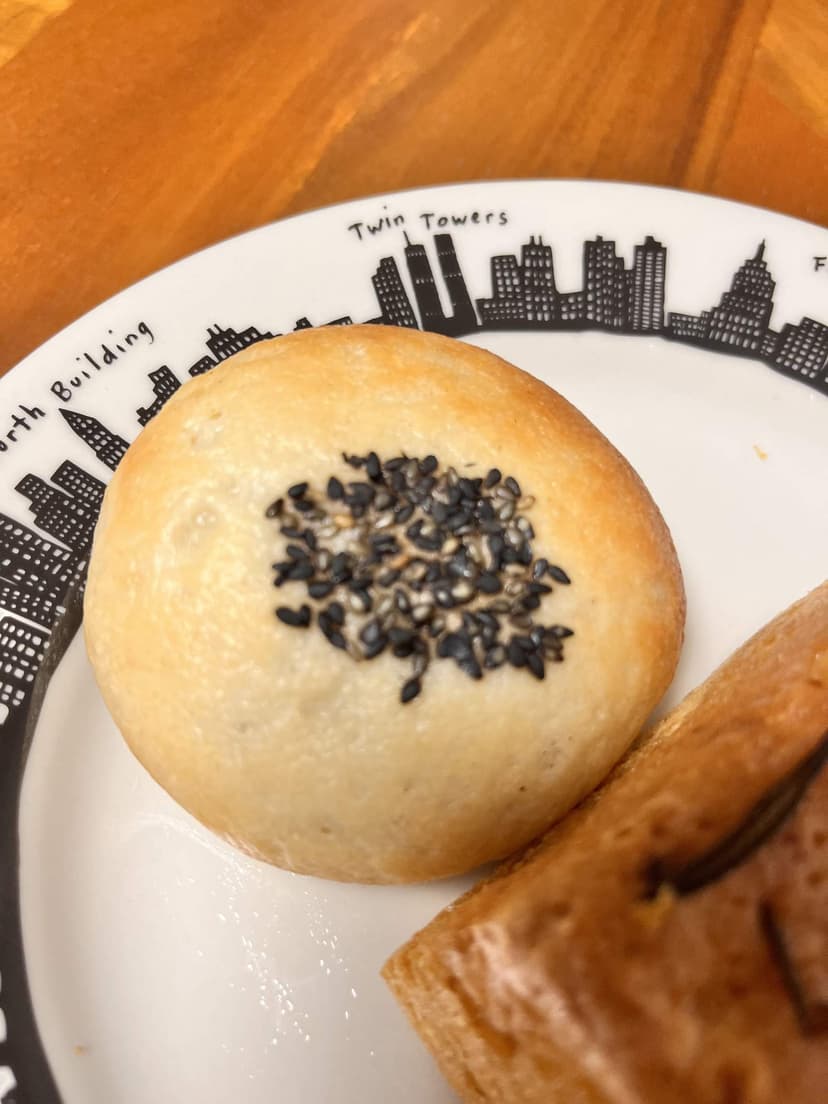
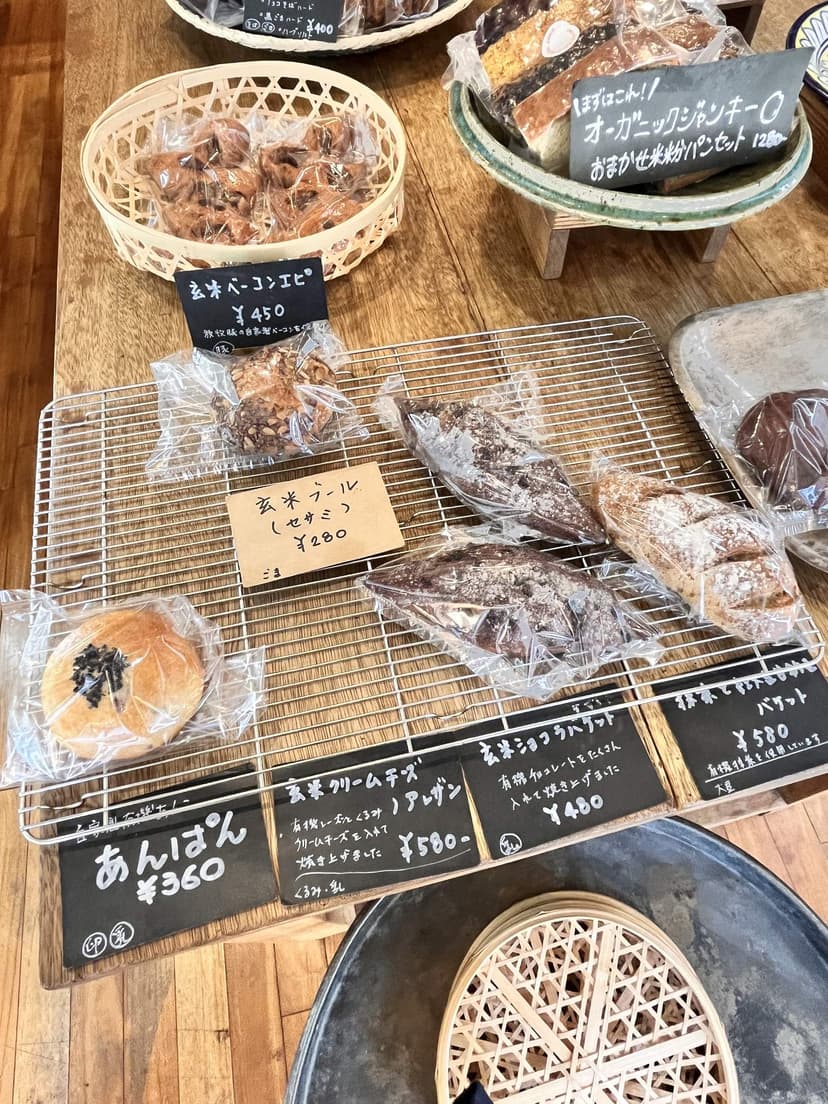
Anpan (¥360). A soft, springy bun with a gently sweet red bean paste inside. The small card on the shelf lists egg and dairy for this one, so it is not one of the egg-free, dairy-free items.
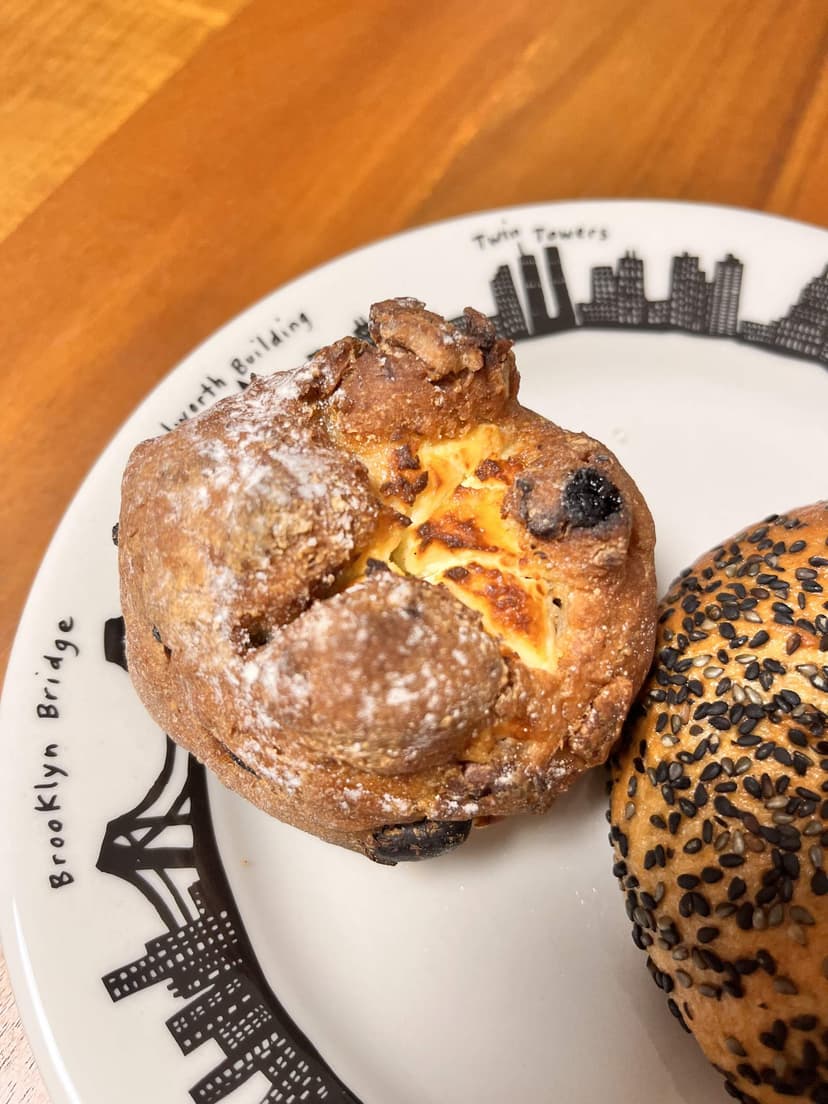
Brown-rice cream cheese bun, noix-raisin (¥580). A brown-rice bun baked with organic raisins, walnuts and cream cheese, per the shelf card. It contains walnuts and dairy, which the card also says, so this is the one to skip if you are avoiding nuts or milk as well as gluten.
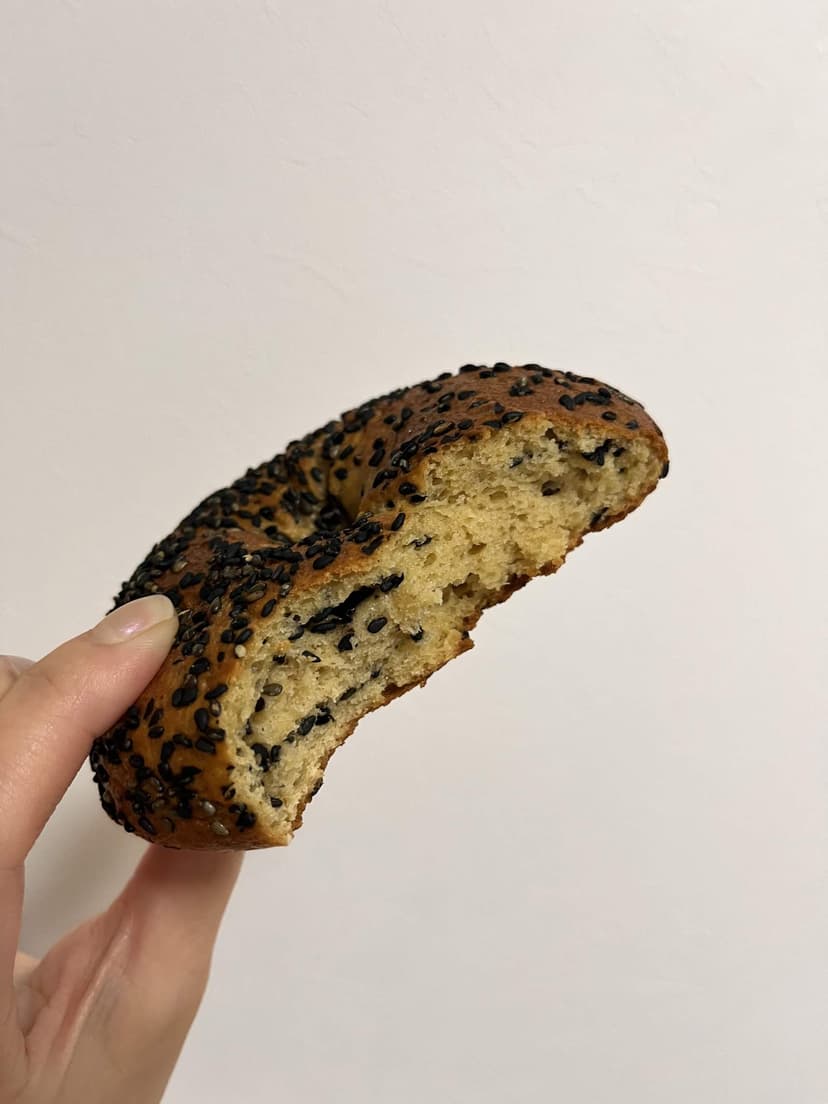
Chickpea and rice flour bagel, organic black sesame (¥450). The bagels come in plain (¥400), organic black sesame, organic chocolate and chocolate chip. Ours waited until a later breakfast at home, sliced and served with salad and eggs. The crumb is dense and even, with the sesame running right through it.
Free: the Gluten-Free Japan Pre-Trip Checklist
What to do, and when, from six months out to your days in Tokyo. Two pages, for your phone or for print.
Get the free checklist →Go in the morning, or plan around the freezer
The shop is small and the racks empty out. That is the main practical thing to know. If you are staying nearby, a morning visit gets you the full range; if you can only come later, you may find the racks thin but the oven still running.
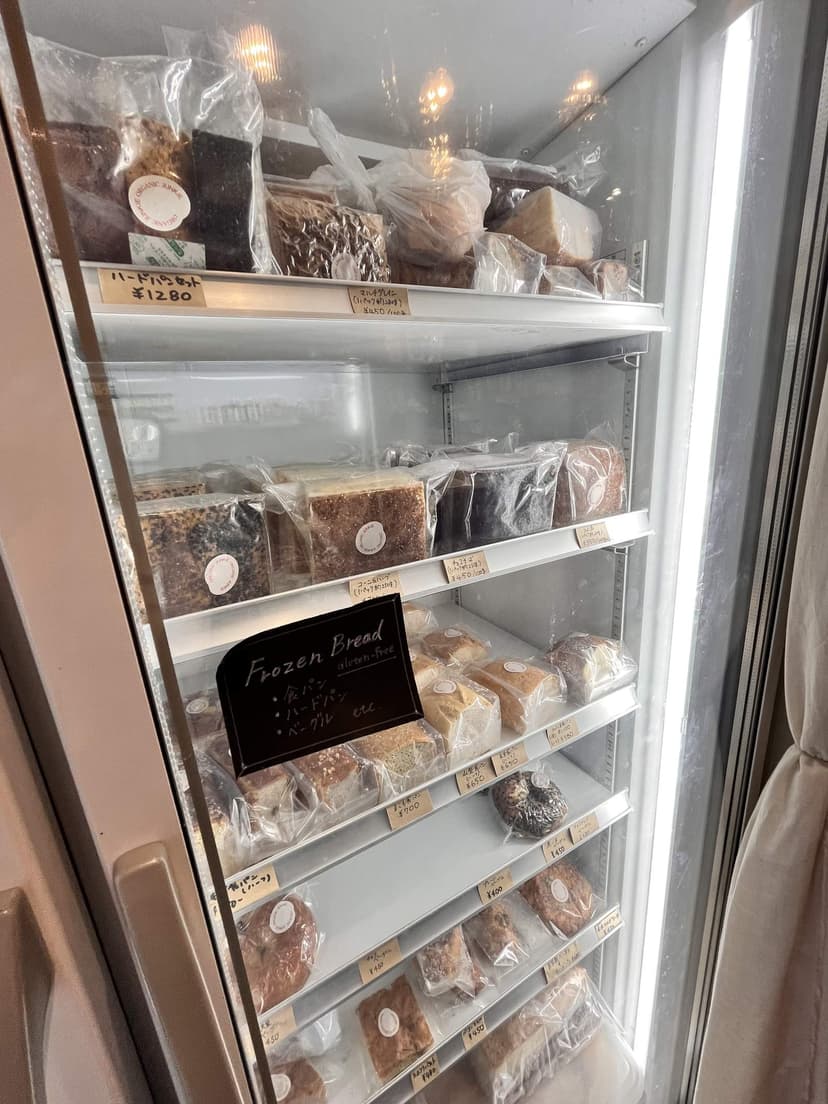
The other answer is the freezer. A large glass-fronted freezer holds frozen breads and frozen desserts, all individually packed. For a traveler with a fridge in the room, this is the way to turn one visit into several breakfasts.
The shop also has an online store, which is useful if you are in Japan long enough to have a delivery arrive.
The gluten-free picture, honestly
This is the strongest form a bakery can take for us: gluten-free by design, in a kitchen that, as we were told, wheat does not enter. You are not asking a wheat bakery for an exception, and you are not scanning a shelf for the one safe item.
A few things we want to say plainly:
- The grain list is buckwheat-friendly, not buckwheat-free. Buckwheat is one of the flours. If you have a buckwheat allergy, which is a separate thing from gluten, ask before you buy.
- Not every item is egg-free or dairy-free. The base dough is, but the anpan card lists egg and dairy, and the cream cheese bun has cheese and walnuts. The shelf cards are handwritten in Japanese, and the allergen marks are small circles at the bottom. If you cannot read them, point and ask.
- We did not see a certification mark for gluten-free testing, and we did not ask for one. What we have is the shop's own description and what we were told at the counter.
- Kitchen Wataragarasu, the parent restaurant, is a separate place. We have not been, and we do not know how it handles gluten. Do not assume the restaurant is as strict as the bakery.
Komemaru, the wheat-allergic half of this team, ate everything we bought with no trouble. As always, if you are celiac, the person at the counter is the one to ask, and the printable Japanese allergy cards in our Tokyo guide make that conversation short.
What we loved
- The focaccia was crisp on the outside and soft inside, with potato in the dough and salt on top. It is the reason to go back
- Nothing on the rack needs screening. Shopping here is shopping, not reading labels
- The freezer turns one visit into a week of breakfasts in a hotel with a fridge
Good to know
- Takeout only. There is nowhere to sit, so plan to take it to go.
- Closed Sundays, open 10:00 to 20:00 as of our visit in August 2026. While their website only mentions being closed on Sundays, their Instagram states they are also closed on public holidays.
- Mornings are when the range is fullest; afternoons can be thin but the oven keeps going
- Check the latest on the shop's Instagram, which is where sold-out days and new breads show up first
Nearby: how to fit it into your day
- Ebisu Station is on the JR Yamanote Line and the Tokyo Metro Hibiya Line, which makes this an easy stop between Shibuya and Meguro
- Yebisu Garden Place, the large complex on the other side of the station, has open space to sit with a bag of bread
- Daikanyama and Nakameguro are both within walking distance of Ebisu, and our rice-flour bakery and pastry shop in Nakameguro makes a natural second stop on the same afternoon
The bottom line
ORGANIC JUNKIE is a gluten-free bakery in the fullest sense: rice and grain flours, an organic-certified kitchen, and, as we were told, no wheat through the door. Go in the morning, buy the focaccia if it is out, and use the freezer to take the rest of the week home with you. If breakfast is the meal that worries you most in Japan, this shop and yoka in Meguro are two answers a short train ride apart.
For more places like this across Tokyo (100+ spots we have visited, with maps and ordering notes), see the Gluten-Free Tokyo Planning Guide.
We visited in August 2026 and paid for our own food. This article is a record of our personal experience, not a safety guarantee. Menus, prices and lineups change; always confirm directly with the shop. Verified, celiac-focused listings live in our Tokyo guide.