

Tonkatsu is not gluten-free. The coating alone settles it, before the sauce is even on the table.
A cutlet is built in three layers before it goes near the oil: wheat flour, then beaten egg, then panko. Two of those three are wheat, and neither is optional in the standard method.
Then the sauce arrives, and that part has a less tidy answer. Some tonkatsu sauces contain wheat and some do not, and telling them apart is its own problem. It changes what you can pour on the plate. It does not change the answer on the cutlet.
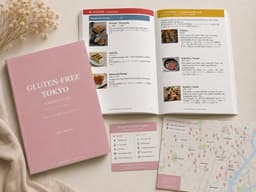
Planning a gluten-free trip to Tokyo?
See the 100+ verified spots in our Tokyo Guide →The pork is fine. It was always fine. Everything wrapped around it is the problem.
Who is writing this
Komemaru has a mild wheat allergy, not celiac disease. Ordinary tonkatsu is not something she eats, since the flour, the batter and the panko are all wheat. We would rather say the allergy part at the top than have you weigh our advice without knowing it.
What we can offer is not celiac experience. It is what goes into the coating and the sauce, in Japanese, read off the packets in our own kitchen. Every safety judgement here is written for a celiac reader, not for us.
The three layers
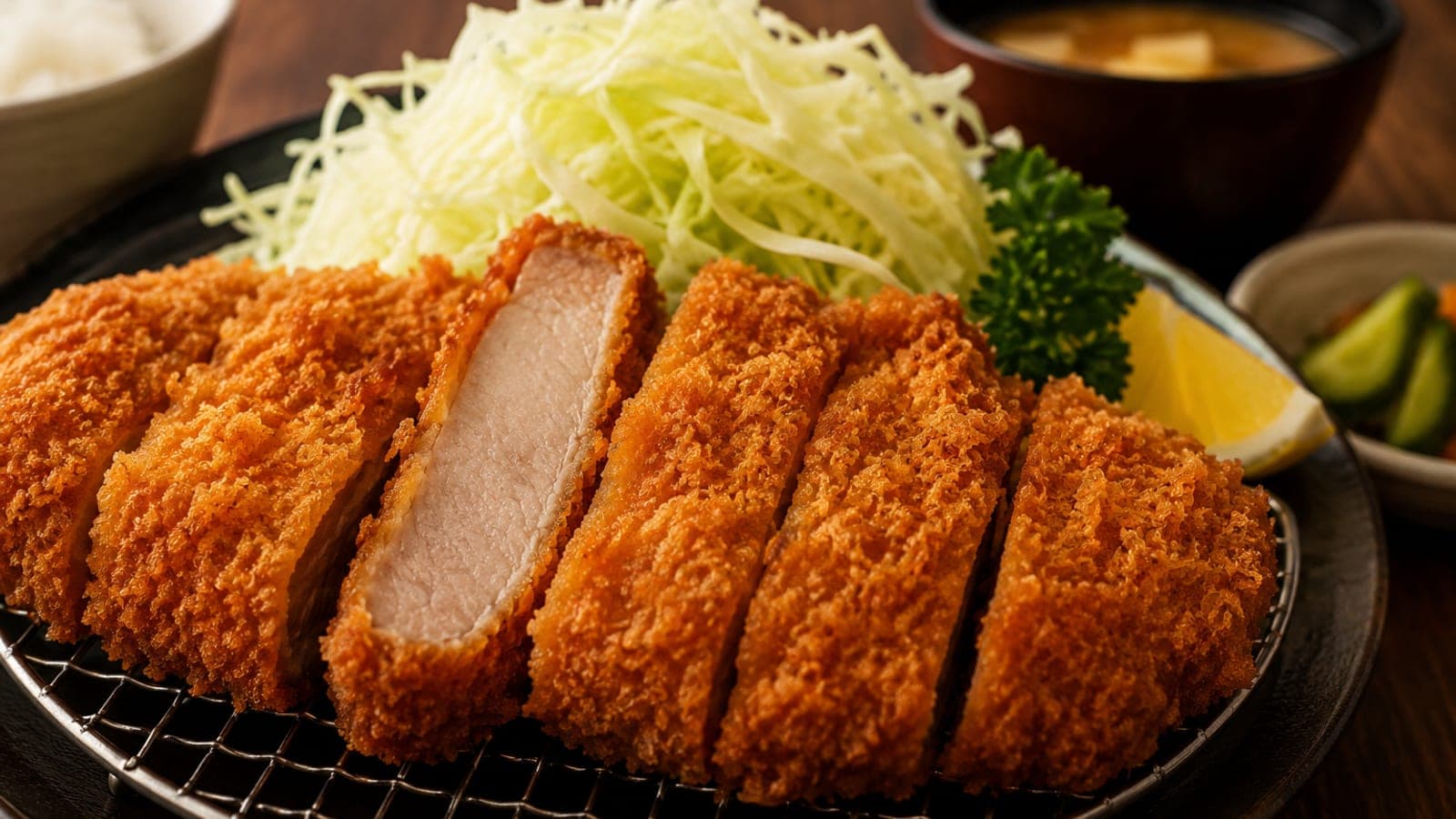
Tonkatsu is a pork loin or fillet, breaded and deep fried. The breading is a fixed sequence that Japanese kitchens and home cooks follow in the same order:
- Komugiko (小麦粉), plain wheat flour, dusted over the meat so the egg has something to grip
- Beaten egg, which is the one layer with no wheat in it
- Panko (パン粉), the breadcrumbs that give katsu its distinctive coarse, crunchy crust
Each layer exists for a mechanical reason, which is why none of them is optional in the standard method. The flour makes the egg stick to the meat. The egg makes the panko stick to the flour.
Panko is worth pausing on, because the English translation understates it. Breadcrumbs sounds like a dusting. Panko is bread, dried and shredded coarse: the word is literally bread powder. It is the thickest layer on the cutlet and the entire reason katsu tastes the way it does. If you have been reading English menus and treating crumbs as a minor detail, this is the one to reset.
The sauce depends on the bottle
Tonkatsu arrives with a dark, thick, fruity sauce, usually poured over the cutlet, or set on the table in a small pot for you to pour yourself.
Tonkatsu sauce (とんかつソース) belongs to the family of sauces Japan adapted from Worcestershire sauce: fruit and vegetables, vinegar, sugar, spices, and a range of seasonings. Wheat is not built into the category the way it is built into panko. Some products contain wheat-derived ingredients or soy sauce, others contain neither, and both kinds sit side by side on the same supermarket shelf.
That mixture is what makes the sauce awkward. Two bottles of the same dark brown sauce can give opposite answers, and nothing about the colour, the taste or the price tells you which one you are holding. It is a label to read each time rather than a category you can rule in or out.
In a restaurant you never get to read it. The sauce is decanted into an unlabelled table pot, and the staff would have to go and find the bottle to check.
Safety note
The word katsu is the warning label.
Katsu means a panko-breaded, deep-fried cutlet. It does not describe the meat, it describes the coating. So every dish with katsu in the name carries the same two wheat layers:
- Tonkatsu (とんかつ), pork
- Chikin katsu (チキンカツ), chicken
- Menchi katsu (メンチカツ), a minced meat patty
- Hamu katsu (ハムカツ), ham
- Gyu katsu (牛カツ), beef
- Kushikatsu (串カツ), skewered pieces, an Osaka speciality
Korokke (コロッケ), the croquette, does not carry the word but uses the same three layers around mashed potato, so it belongs on the list too.
There is no version of katsu that is a different technique. Reading the menu for a lighter option within the katsu section will not find one.
Free: the Gluten-Free Japan Pre-Trip Checklist
What to do, and when, from six months out to your days in Tokyo. Two pages, for your phone or for print.
Get the free checklist →Where a cutlet turns up inside something else
The breaded cutlet is a component as often as it is a main dish, and each combination adds its own second problem.
- Katsudon (カツ丼): the cutlet simmered with onion and beaten egg in a soy-based broth, served on rice. Breading plus soy sauce
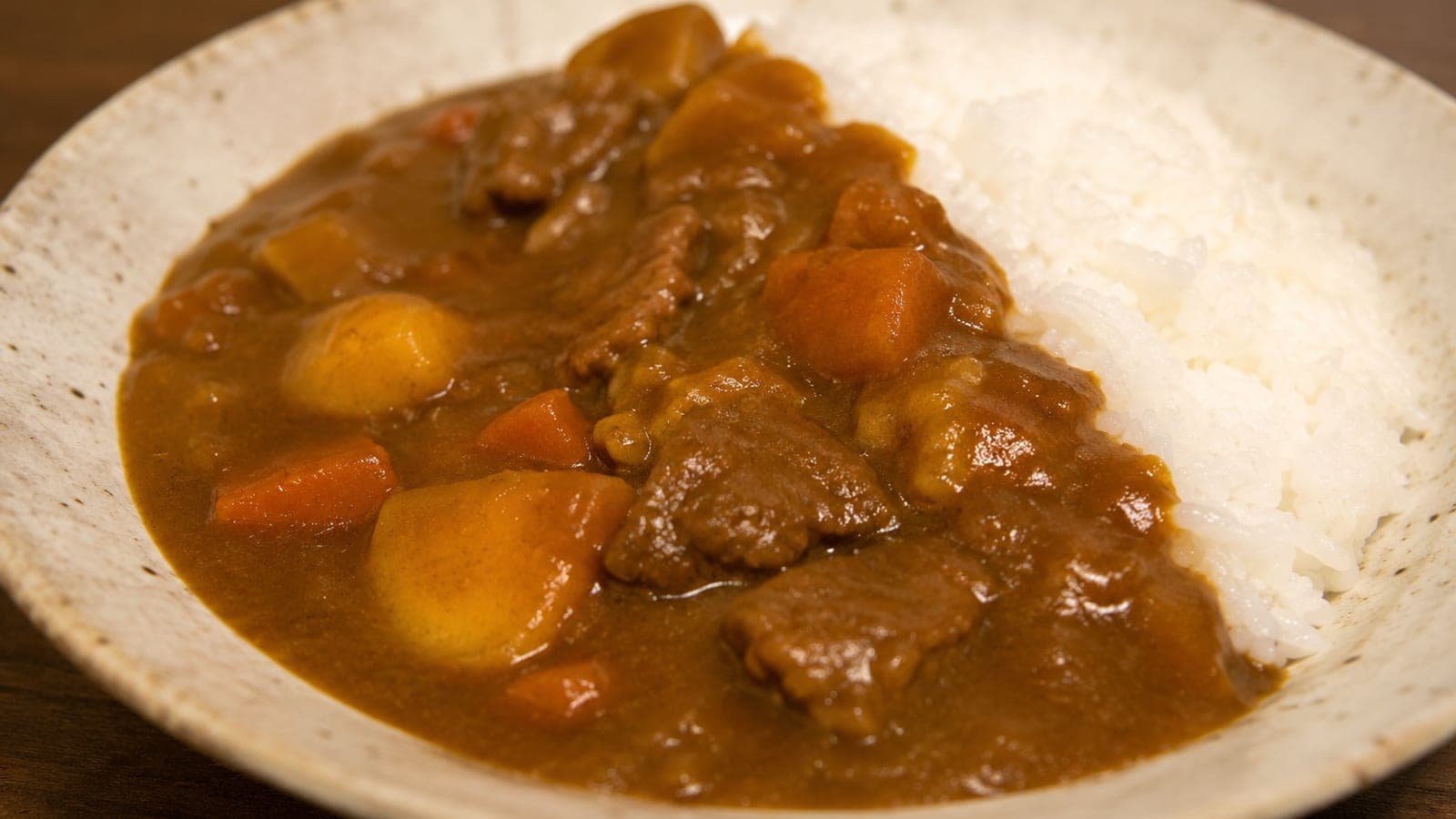
- Katsu curry (カツカレー): the cutlet on Japanese curry, whose sauce is thickened with a wheat flour roux. See our page on Japanese curry
- Katsu sando (カツサンド): the cutlet in a white bread sandwich, sold at station kiosks and convenience stores
- Ebi furai (エビフライ) and kaki furai (カキフライ): prawn and oyster in the same panko coating
- Bento boxes: a small cutlet is one of the most common items in a supermarket or station lunch box
The rest of the plate
A tonkatsu set is the cutlet plus a fixed cast of sides, and they need separate answers.
- Shredded cabbage: the cabbage is fine. The dressing that comes with it is often sesame or a soy-based dressing, and it is usually already poured or sitting in an unlabelled bottle
- Rice: fine
- Miso soup: not automatic. Miso itself can be made with barley, and the dashi is often an instant granule blend. This deserves its own page and will get one
- Tsukemono (漬物), the pickles: many are seasoned with soy sauce
- Karashi (辛子), the yellow mustard: usually mustard and water, and among the safer things on the tray
The frying oil
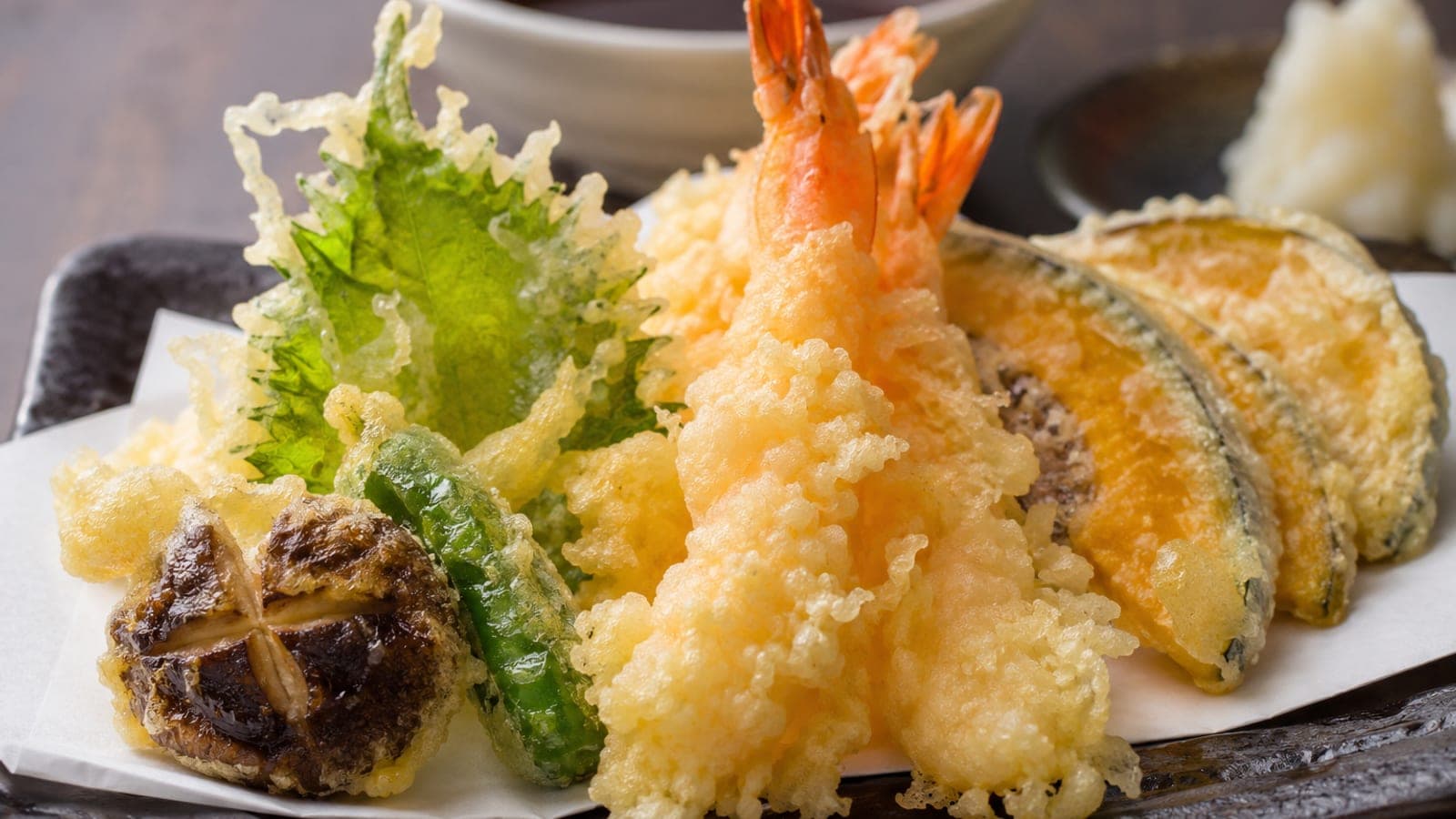
Same issue as tempura. A tonkatsu restaurant fries panko-coated items all day in one oil, so anything else emerging from that fryer has been cooked in wheat. In a specialist tonkatsu shop, essentially everything hot on the menu comes out of it.
This is why we would not suggest asking a tonkatsu restaurant to prepare something differently. There is no version of the room that works, in the way that a tempura restaurant with no wheat batter in the kitchen genuinely does work. We cover that difference on our page on tempura.
Pork dishes people call safe, and why we do not
Pork itself is naturally gluten-free. That fact gets stretched, in some English-language guides and in some AI answers, into a list of Japanese pork dishes offered as safe alternatives to tonkatsu. We would not order any of them on trust. Since the list keeps circulating, here is what is actually in each one:
- Shabu-shabu (しゃぶしゃぶ), thin pork swished through hot broth: the broth is sometimes plain kombu stock and sometimes soy-seasoned, and the dipping sauces are the bigger issue. Ponzu is built on soy sauce. Sesame sauce is built on sesame paste rather than soy sauce, but bottled versions commonly list soy sauce or miso in the ingredients, so neither dipping sauce can be assumed safe
- Salt-grilled pork (豚の塩焼き, buta no shioyaki): salt is the seasoning, which tells you nothing about whether the meat was dusted with flour before it was cooked. A light dusting is an ordinary step for browning, and it is not something a menu mentions
- Simmered pork of any kind: the broth is the unknown, and there is a good chance soy sauce is in it
- Buta no kakuni (豚の角煮), braised pork belly: soy sauce is what makes the dish, so treat this one as a no rather than a question
- Shogayaki (生姜焼き), ginger pork: the ginger is fine, the sauce is soy sauce. Also a no
A warning about the usual advice
Pork is gluten-free. A pork dish is not.
If you find a page listing shabu-shabu or salt-grilled pork as safe choices for celiacs in Japan, that page is describing the meat and skipping everything done to it. We think that advice is wrong, and it is the kind of wrong that ruins a trip.
Every dish above still needs the same three answers: what is in the broth, what is in the dipping sauce, and whether anything was dusted on the meat before cooking. A plain-sounding name is not one of the answers.
The pattern by now is familiar. The meat is never the problem. What gets added to it, before or after the heat, usually is.
So what does work? Two things, honestly. A restaurant that has already been checked, which is what our Tokyo guide is for. Or your own kitchen, which is the next section.
Making it at home
We cook tonkatsu at home a few times a year, and the reason is the one above: as far as we have been able to find, Tokyo has essentially no gluten-free tonkatsu restaurant as of August 2026. If you want katsu here, the kitchen is your own.
It is worth being honest about the work. Deep frying is not a light dinner to cook. It needs a decent depth of hot oil, it leaves the room smelling of it, and the used oil has to go somewhere afterwards. In a rental, check that the kitchen actually has a pot deep enough to fry in before you buy any of the ingredients. That is the step that decides whether this is possible at all.
What we use:
- Salt and pepper (塩胡椒) on the pork first. Seasoning the meat before the coating goes on is the standard first step, and it is the one part of the method that does not change
- Rice flour (米粉) in place of wheat flour. It dusts and grips the same way
- The egg, unchanged
- Gluten-free panko (グルテンフリーのパン粉), made from rice flour bread
- Rice oil (米油) for frying, which is what we keep in the house
- Salt for the table, ideally rock salt (岩塩). This is for eating, not for cooking, and it is worth treating as an ingredient of its own
- Gluten-free tonkatsu sauce, when we can get hold of it
Rice flour and gluten-free panko are both sold in Japan, but not in every shop. A large supermarket will usually have them. A small neighbourhood supermarket often will not. Buy them when you see them rather than on the day you plan to cook.
Salt is the other way to eat a cutlet, and it settles the sauce question. Good tonkatsu restaurants put salt on the table next to the sauce, and it is not there as a lesser option. At home we usually put both on the table and go back and forth, sauce on one piece and rock salt (岩塩) on the next, for the two different tastes. It is not that we have given up on sauce. It is that salt is genuinely good on a cutlet in its own right.
Which also means a missing bottle does not cancel dinner. Katsu with nothing but rock salt is a complete meal, not a compromise, and if you are going to spend a little extra anywhere, spend it on the pork and on the salt rather than on the sauce. Decent meat with a decent rock salt is noticeably better than cheap versions of either, and salt has no label to read.
Shredded cabbage on the side, the way a tonkatsu shop serves it. With salt on the table it needs no dressing, which conveniently removes another thing to check.
We have not tried baking a katsu instead of frying it, so we cannot tell you it works. Recipes for it exist. What we can say is that our first attempt at oven-cooked karaage, the fried chicken relative of this dish, failed, and the second worked only after we adjusted for our own oven. Oven results depend heavily on the oven, so we would not build a travel plan around it.
What to ask, and what to ask for
In a tonkatsu restaurant there is no version of the main dish that works, so these questions are about finding the way out rather than adjusting the cutlet.
パン粉を使っていない料理はありますか?
肉に小麦粉をまぶしていない料理はありますか?
とんかつソースの原材料に小麦は入っていますか?
What each line says:
- Do you have any dishes that do not use panko breadcrumbs?
- Do you have a dish where the meat is not dusted with wheat flour?
- Does the tonkatsu sauce contain wheat in its ingredients?
Read aloud, roughly:
Panko o tsukatte inai ryouri wa arimasu ka?
Niku ni komugiko o mabushite inai ryouri wa arimasu ka?
Tonkatsu soosu no genzairyou ni komugi wa haitte imasu ka?
One question not to ask
Do not ask for a dish seasoned only with salt.
It sounds like the safe request and it is not. It asks about taste, and the wheat is often somewhere taste does not reach. Pork dusted with a little flour and then seasoned with salt answers that question with an honest yes, from a member of staff who is not trying to mislead you at all.
Name the ingredient you cannot eat instead, which is what the first two lines above do. Flour and breadcrumbs are things a kitchen can check. A description of how you want it to taste is not.
Both questions name an ingredient rather than a flavour, which is the difference that matters. Asking what a kitchen already has, rather than asking it to change what it does, also tends to get a more useful answer in Japan.
The short version
Tonkatsu is wheat flour and bread wrapped around pork, fried in oil that only ever fries breaded things. That is the whole answer: not gluten-free, on the coating alone. The word katsu means that coating, so every katsu dish on the menu answers the same way.
The sauce is the one part that varies. Some brands carry wheat and some do not, and in a restaurant you cannot see which bottle the table pot came from.
There is no clever order that works in a tonkatsu restaurant, and the pork dishes recommended elsewhere as substitutes are not as safe as their names suggest. What works is a restaurant checked in advance, or a cutlet you make yourself with rice flour and gluten-free panko.
For the places in Tokyo we have visited and checked ourselves, see the Gluten-Free Tokyo Planning Guide.
This article describes what goes into tonkatsu in Japan and how our own household cooks around it, in a house where one of us has a mild wheat allergy rather than celiac disease. It is a record of our experience and our reading of ingredients, not medical advice or a safety guarantee. Products and restaurant recipes vary, so always read the label and confirm directly with the restaurant. Information is current as of August 2026.