Ask a gluten-free traveler what they will miss most in Japan and ramen comes up before anything else. The noodles are wheat, the tare usually starts with wheat-brewed soy sauce, and every bowl in the shop comes out of the same pot of boiling water. It is the dish our community writes off before the plane lands.
SORANOIRO has been chipping away at that for years. The company says on its official site that it was the first in Japan to put a gluten-free ramen on its regular menu, alongside the vegetable-based Vegesoba it is known for and a vegan ramen. In October 2025 the brand moved its flagship from Kojimachi to Ginza, describing the new store as a flagship built with international visitors in mind. The same release notes the shop as a Bib Gourmand pick in the Michelin Guide Tokyo.
So we went.
Planning a gluten-free trip to Tokyo?
See the 100+ verified spots in our Tokyo Guide →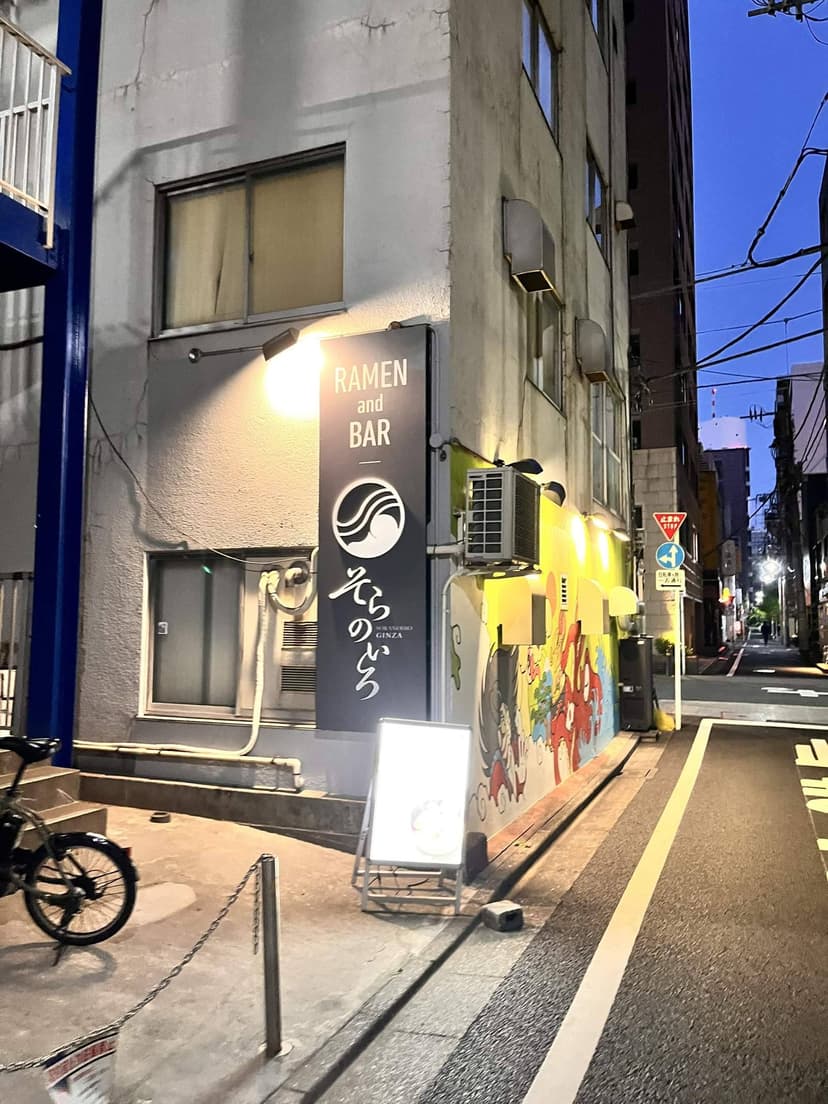
The setting: a Ginza side street, a mural, and a wooden door
The flagship sits on the ground floor of a building in Ginza 2-chome, about three minutes from Ginza-itchome Station Exit 11 on the Yurakucho Line, and about the same from Higashi-ginza Station Exit A7. Two lines, two exits, both short walks: for a neighborhood as dense as Ginza, that is unusually easy.
Look for the vertical sign reading RAMEN and BAR, and for the mural painted along the wall beside the shop. Both are easy to spot from the corner, even if your map app is being vague about which side of the street you want.
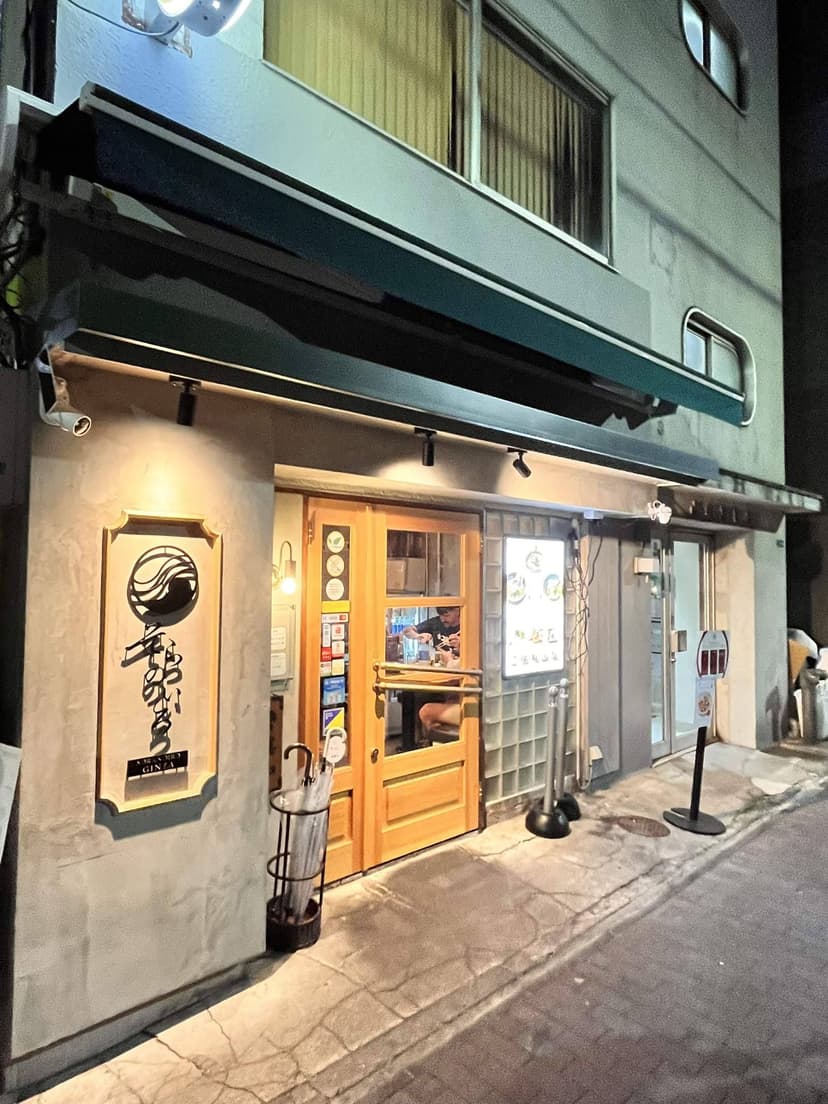
Inside it reads more like a Ginza dining room than a ramen counter. The company describes the interior as sofa counter seating plus a private room. Lunch is ramen; in the evening the menu opens up with drinks and small plates, which is not how most ramen shops in Tokyo work.
The signage outside is in English as well as Japanese, creating a welcoming atmosphere that makes it easy for international visitors to stop by.
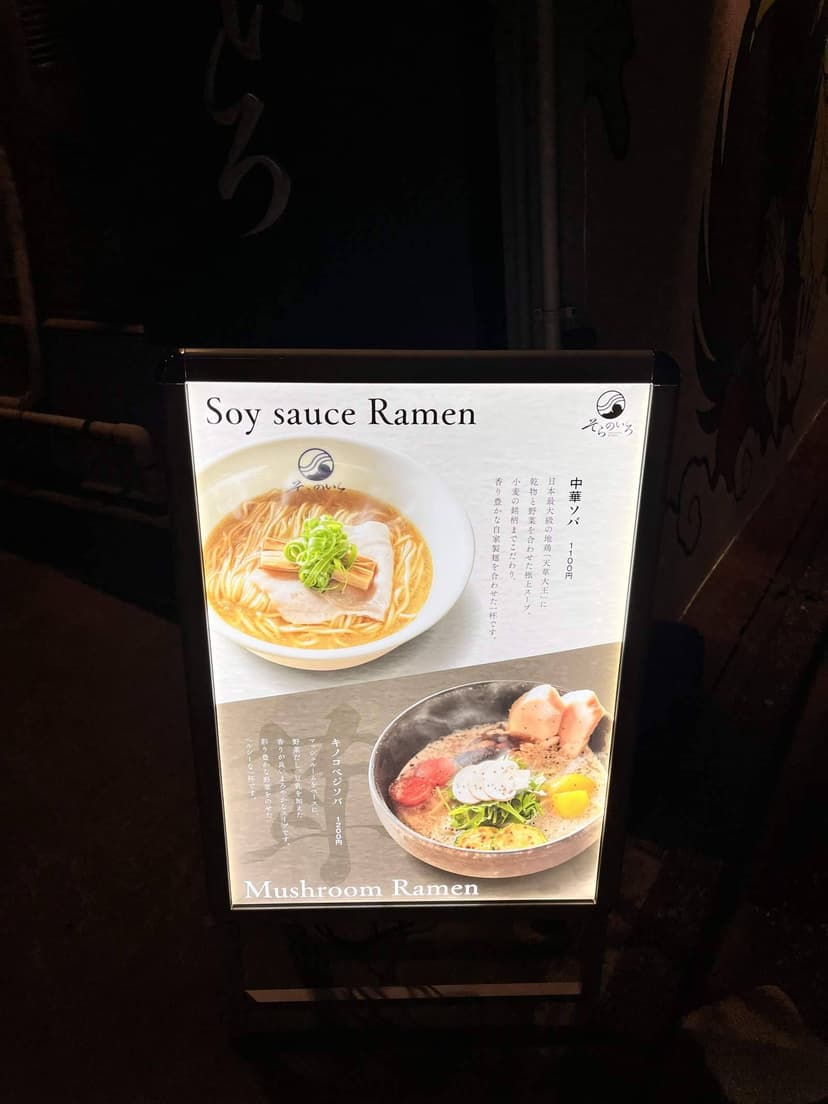
How the gluten-free option actually works here
This is the part worth reading carefully, because the mechanism is unusually clear.
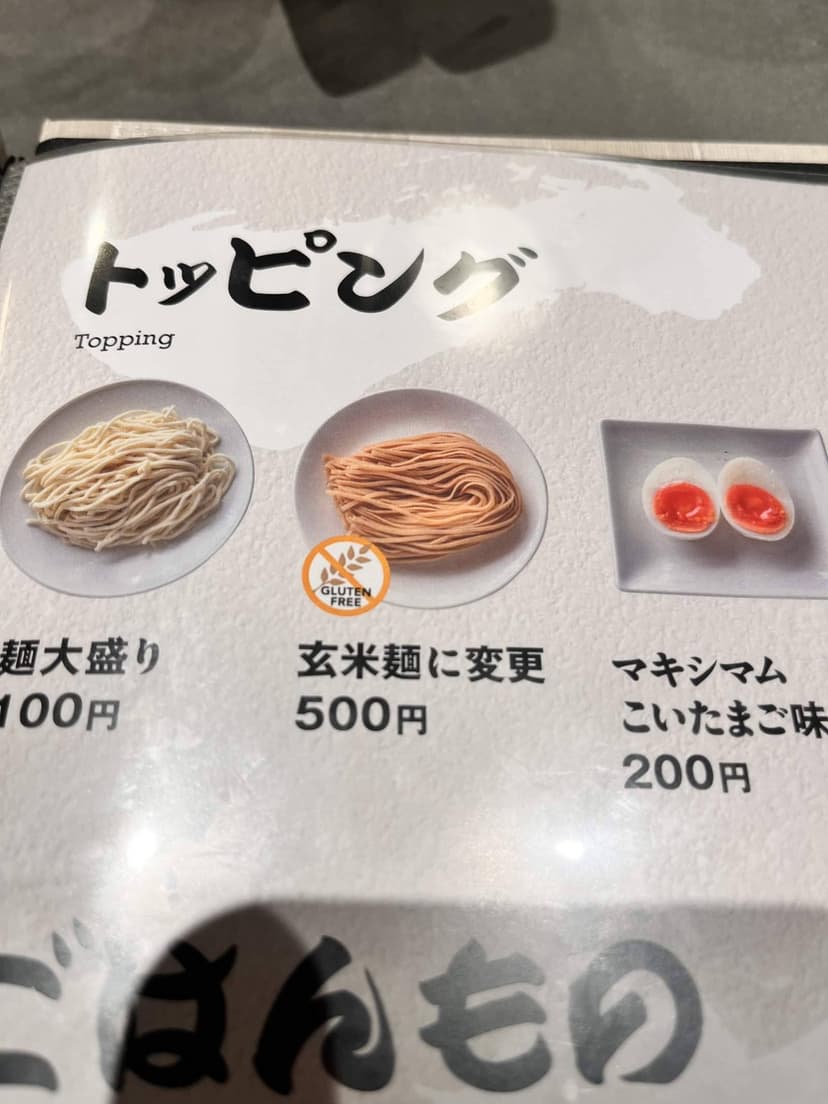
The noodle swap is a menu item. In the toppings section, next to the ordinary extras like a larger portion or a marinated egg, there is a line for changing your noodles to brown-rice noodles for ¥500. It carries a gluten-free symbol printed right on the menu. You are not asking for a favor. You are ordering something the shop already sells.
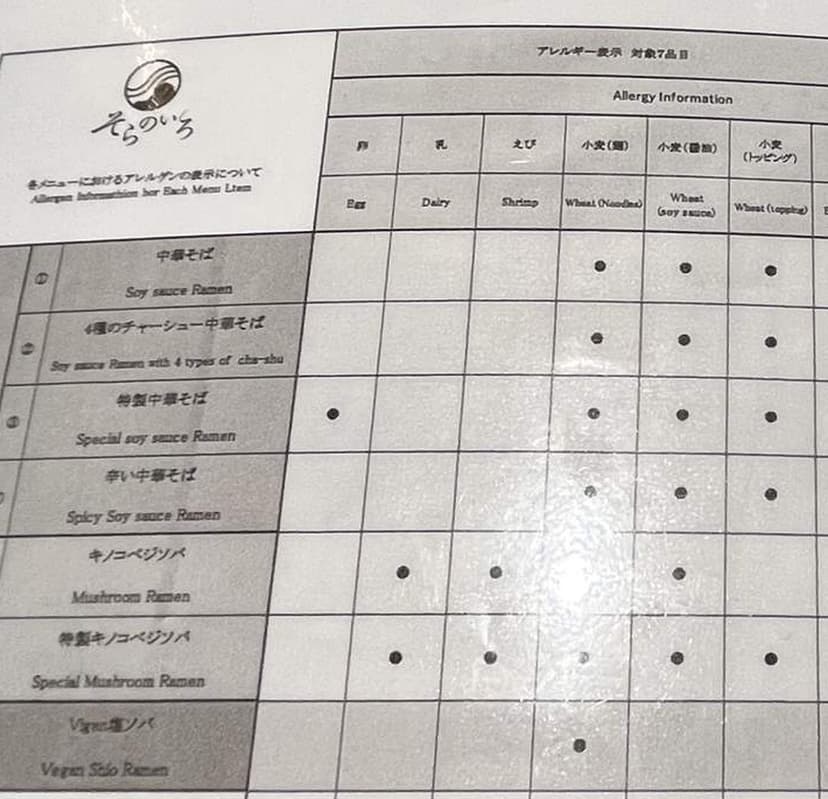
The allergen sheet is at the table, in Japanese and English. It lists every bowl down the side and the allergens across the top, and the wheat column is split into three: wheat in the noodles, wheat in the soy sauce, and wheat in the toppings. If you have ever tried to work out whether a soup contains wheat-brewed soy sauce, you know how rare that level of detail is.
That split is what makes the Vegan Shio Soba interesting. On the sheet we saw, its only mark in the three wheat columns is under wheat (noodles). Nothing under the soy sauce column, nothing under the toppings column. Change the noodles, and the wheat-containing ingredients are out of the bowl.
And they cooked our noodles separately. When we told the staff about the wheat allergy, they boiled our noodles in a separate pot. In a ramen kitchen, where one vat of water usually serves the whole shop, that is a real step and not every shop will take it.
Wheat noodles are made in this kitchen, because the wheat-noodle bowls are the heart of the menu. A separate pot and a clean allergen sheet lower the risk; they do not create a wheat-free kitchen. Komemaru, the wheat-allergic half of this team, has a mild allergy rather than celiac disease, and ate here comfortably. If you are celiac, this is a shop to talk to before you sit down rather than one to walk into on the strength of a blog post. The printable Japanese allergy cards in our Tokyo guide are built for exactly that conversation.
Free: the Gluten-Free Japan Pre-Trip Checklist
What to do, and when, from six months out to your days in Tokyo. Two pages, for your phone or for print.
Get the free checklist →What we ate: the Vegan Shio Soba
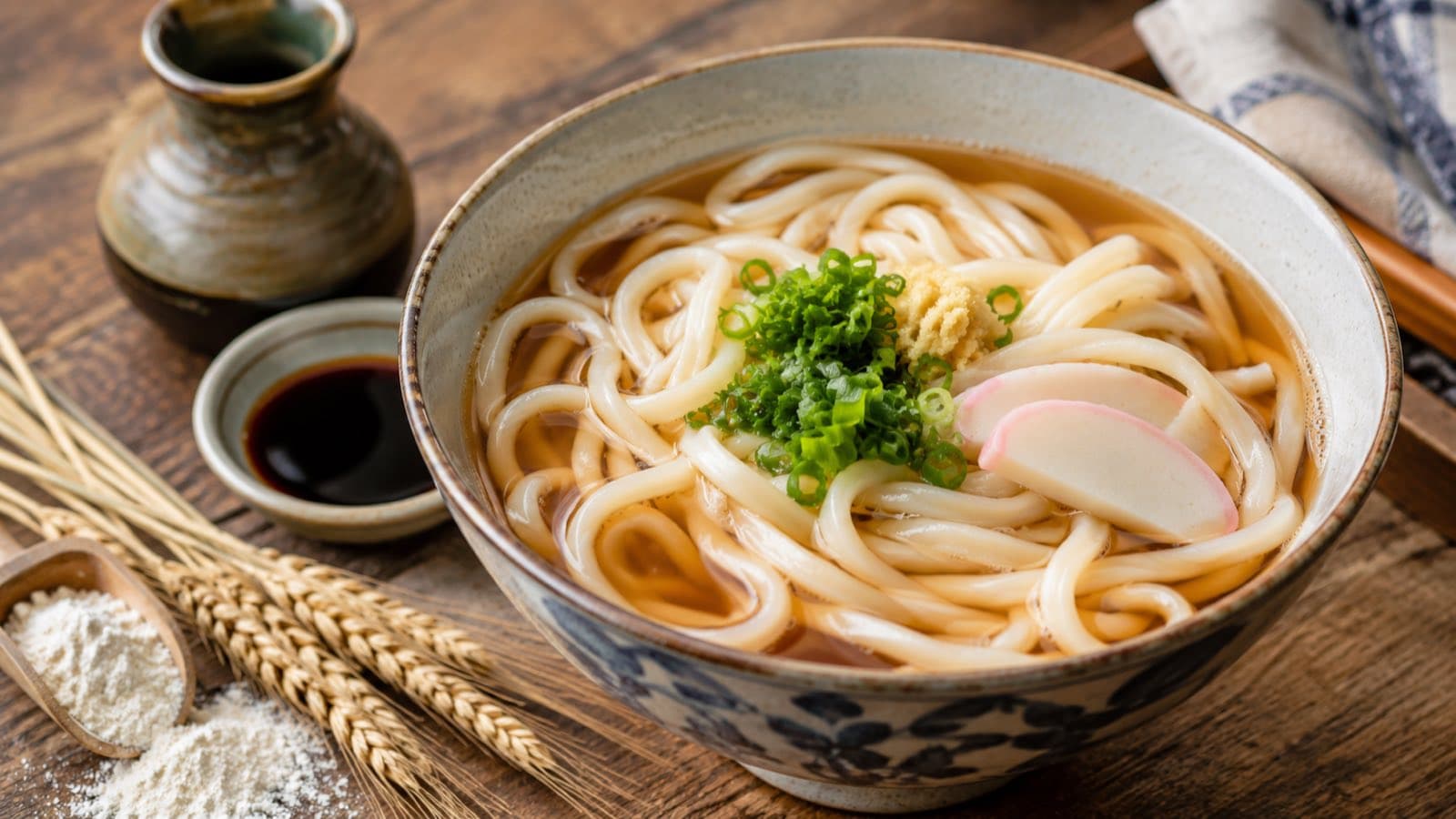
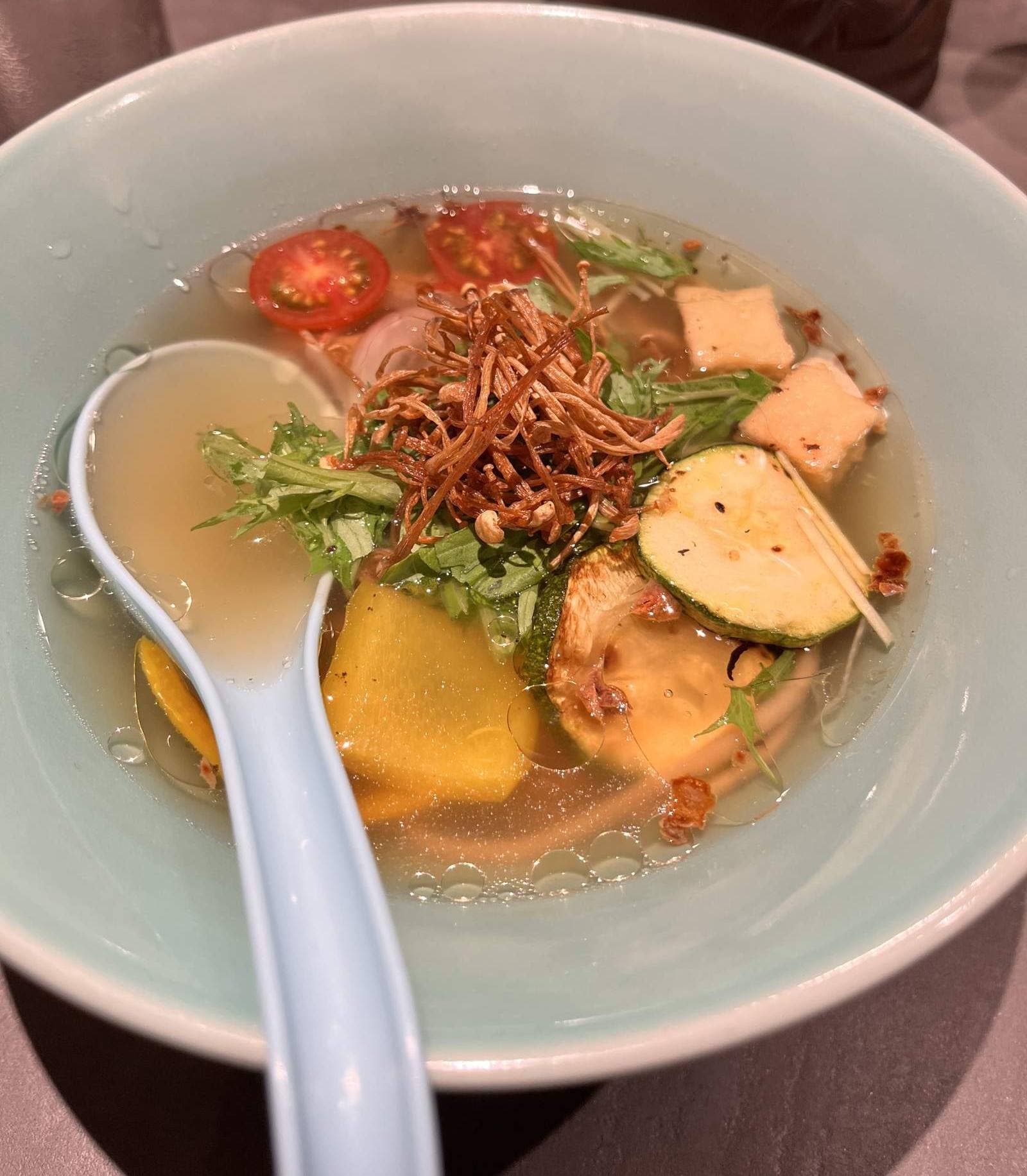
We had the Vegan Shio Soba (¥1,700, or ¥1,100 for a half portion) with the noodles switched to brown rice. It is the bowl at the top of this article.
The broth is clear enough to read the pattern on the bottom of the bowl, and it still tastes full. The vegetables had been given real heat before they went in, so a toasted, almost roasted depth runs underneath the salt, and the bowl eats far more substantially than a clear soup usually does. Tomato, zucchini, mizuna, mushrooms, and a tangle of crisp fried strands on top for texture.
The noodles were the surprise. Springy, with the kind of chew gluten-free noodles almost never manage, and they held right to the bottom of the bowl instead of softening into the soup.
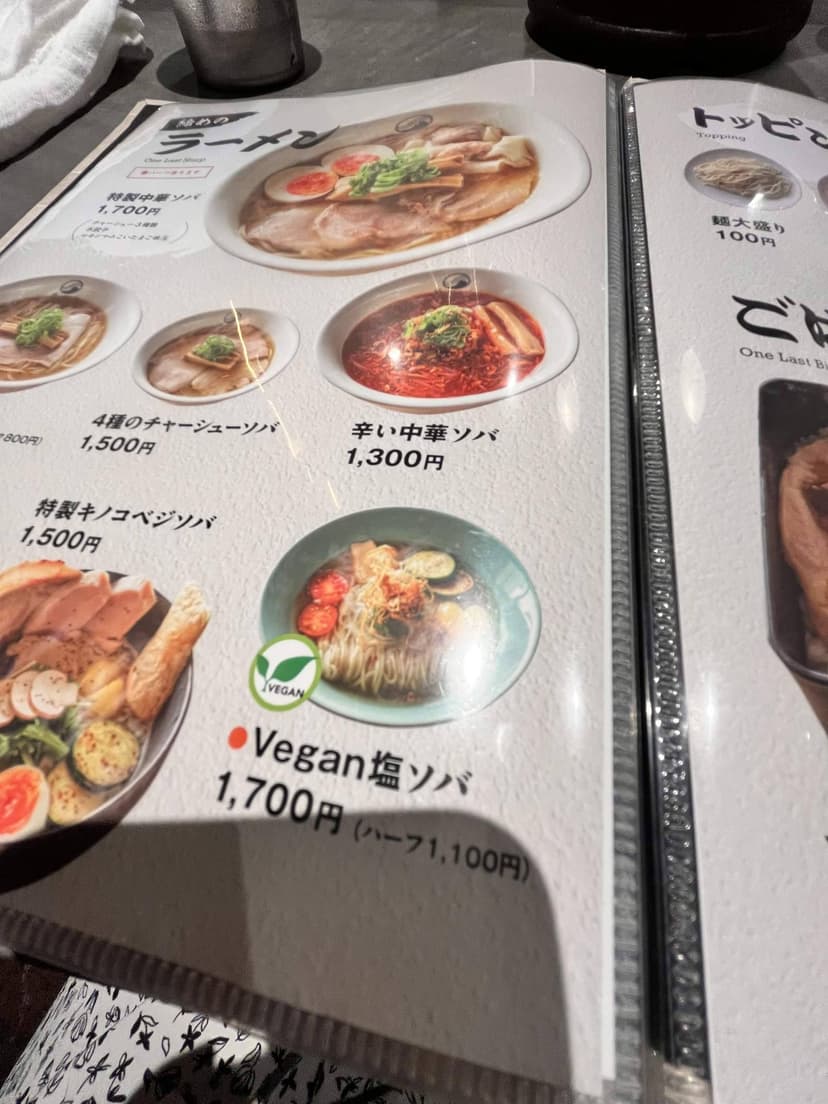
For reference, the rest of the lineup at the time of our visit: Chuka Soba ¥1,100, Spicy Chuka Soba ¥1,300, Chashu Soba with four kinds of pork ¥1,500, Mushroom Vegesoba ¥1,200, Special Mushroom Vegesoba ¥1,500, and Special Chuka Soba ¥1,700. Several bowls, including the Vegan Shio Soba, are also sold as half portions.
What we loved
- The gluten-free option is priced on the menu, not improvised. ¥500 and a symbol, printed in front of you. That changes the whole tone of ordering
- An allergen sheet that separates wheat in the noodles from wheat in the soy sauce. That single distinction answers the question we ask in every restaurant in Japan
- Noodles with actual chew. This bowl does not ask for sympathy. It stands on being good ramen
Good to know
- Hours: the official store page currently lists 11:00 to 14:30 (last order 14:00) and 17:00 to 22:00 (last order 21:30), closed Tuesdays. These have changed since the store opened, so check the page or the shop's Instagram before you go
- Say it when you order, not after. Both the noodle swap and the separate pot depend on the kitchen knowing before your noodles go in
- Budget: ramen ¥1,100 to ¥1,700, plus ¥500 for the brown-rice noodles. Half portions are available on several bowls if you would rather try two things
- Lunch and dinner are different experiences. Ramen at lunch, drinks and small plates in the evening
- Official site: soranoiro-vege.com
Nearby: how to fit it into your day
This one slots into a Ginza afternoon without any detour:
- Kabukiza Theatre sits right at Higashi-ginza Station, one of the two stations you can use for the shop. Even without tickets, the building and its basement arcade are worth the walk
- Ginza's main shopping streets run just north of you, and on weekend afternoons the central avenue closes to cars
- Tsukiji Outer Market is an easy walk from Higashi-ginza, which makes a morning at the market and a ramen lunch a natural pairing
The bottom line
Ramen is the one most people give up on entirely, which is why a shop that sells you gluten-free noodles as a normal ¥500 menu line, hands you an allergen sheet that separates wheat in the soup from wheat in the noodles, and then boils your portion in its own pot is worth writing down. SORANOIRO Ginza is not a wheat-free kitchen. What it is: a well-regarded ramen shop in the middle of Ginza that takes the request seriously, and a bowl good enough that we stopped thinking about the allergy halfway through.
For more places like this across Tokyo (100+ spots we have visited, with maps and ordering notes), see the Gluten-Free Tokyo Planning Guide.
We visited in June 2026 and paid for our own meal. This article is a record of our personal experience, not a safety guarantee. Menus, prices, hours, and kitchen policies change; always confirm directly with the restaurant. Verified, celiac-focused listings live in our Tokyo guide.