
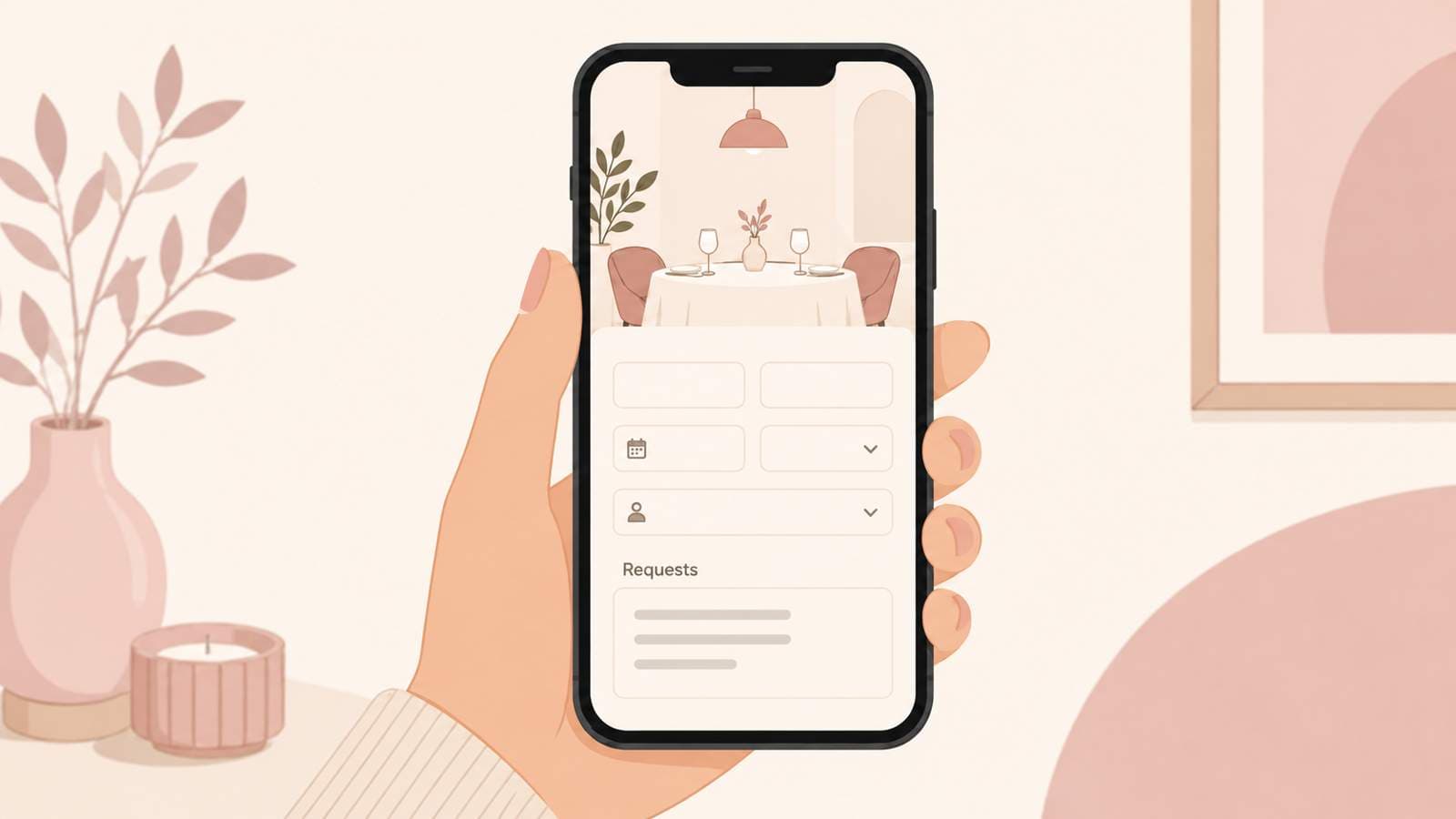
In Japan, the answer to "can you make something without wheat flour?" is usually decided long before you sit down. Stock is simmered in the morning, sauces are mixed in advance, and a set course is planned as one thing rather than assembled plate by plate. Ask at the door and you are asking someone to undo work that is already finished.
So the single most useful thing a gluten-free traveler can do here is put the request in writing at the moment of booking. It costs thirty seconds, and it moves the question from the front of house to the kitchen, where it can actually be answered.
Komemaru has a mild wheat allergy, not celiac disease, and that difference shapes every word of what follows. Below is the exact Japanese text we paste into the request box, unchanged, every time.
Planning a gluten-free trip to Tokyo?
See the 100+ verified spots in our Tokyo Guide →The message we paste into every reservation
Safety note
Read this before you copy anything below.
This message was written for one person with a mild wheat allergy. It says out loud that soy sauce is fine and that a shared kitchen is fine, because both are true for us.
If you have celiac disease, those two statements are not true for you, and sending them would tell a Japanese kitchen the opposite of what you need. Do not paste this message as it is. Read the section further down before you use any part of it.
1名のみ軽度小麦アレルギーのため、小麦粉を使用する料理を避けていただけますと幸いです。
調味料の中に含まれる小麦(醤油など)は食べることができます。
同じ調理場内で小麦を扱っていても問題ございません。
What it says, line by line:
- One person in our party has a mild wheat allergy, so we would be grateful if you could avoid dishes made with wheat flour.
- Wheat contained in seasonings, such as soy sauce, is fine for us to eat.
- It is not a problem if wheat is handled in the same kitchen.
If you need to read it aloud on the phone, this is roughly how it sounds:
Ichimei nomi keido komugi arerugii no tame, komugiko o shiyou suru ryouri o sakete itadakemasu to saiwai desu.
Choumiryou no naka ni fukumareru komugi (shouyu nado) wa taberu koto ga dekimasu.
Onaji chouriba nai de komugi o atsukatte ite mo mondai gozaimasen.
Send all three sentences together, as one message. There is no need to break them up, and no shorter, more polite version we are holding back. We use the same three on the phone that we use in a booking form.
What each line is actually doing
Line one is the ask. It names the allergy and gives the kitchen one concrete instruction: no wheat flour. Wheat flour is something a Japanese cook can see, point at, and swap. That specificity is why it works.
Lines two and three are the reason we get a yes. They are not softening or politeness. They tell the restaurant which things it does not have to solve. Soy sauce stays on the menu. The kitchen does not have to be rebuilt for one guest. What is left is a request a working restaurant can genuinely accommodate on a busy night.
This is the part that took us the longest to learn. An open-ended "I cannot eat gluten" leaves staff to imagine the worst case, and the safest answer to a worst case they cannot verify is no. A narrow, specific request leaves them something to say yes to.
Free: the Gluten-Free Japan Pre-Trip Checklist
What to do, and when, from six months out to your days in Tokyo. Two pages, for your phone or for print.
Get the free checklist →What the person reading your message actually knows
This is the part that explains everything else, and it is rarely spelled out for visitors. Three things are worth understanding before you write to a Japanese restaurant.
"Wheat allergy" is understood. "Celiac disease" usually is not. Wheat is one of the allergens that Japanese labelling rules require food makers to declare, so 小麦アレルギー is a phrase every restaurant worker has met. Celiac disease is a different story. It is rare in Japan, and a great many people here, including people who cook for a living, have never heard the word. That is not carelessness. It is simply a condition that has never walked through their door. This is why we name the allergy and skip the diagnosis: one of those gets understood instantly, and the other can stop the conversation while everyone tries to work out what you mean.
Soy sauce and miso are not filed under "wheat" in a Japanese kitchen. They are seasonings, as fundamental and as unremarkable as salt. When you ask a cook whether a dish contains wheat, the honest answer they give you is very often about flour, noodles, and batter, because that is the frame the word arrives in. So a "no wheat" answer can be completely sincere and still not mean what you need it to mean. Our line two exists precisely because of this gap: rather than hoping the seasoning question comes up, we answer it ourselves before it is asked.
The person taking your order is usually not the person who knows. Floor staff relay questions to the kitchen, and in a busy service the answer that comes back is short. This is not unique to Japan, but it matters more here, because the detail you care about is buried in a seasoning that only the cook has any reason to think about. A written request attached to your booking is worth so much more than the same question asked at the table, because it reaches the kitchen when there is still time to look at a label.
Put those three together and the message writes itself. Name the allergy, not the diagnosis. Say something specific about seasonings instead of waiting to be asked. Send it in writing, early, to the people who prepare the food.
Plain everyday Japanese does the rest. "Please avoid dishes made with wheat flour" is understood instantly by anyone, in any restaurant, at any hour.
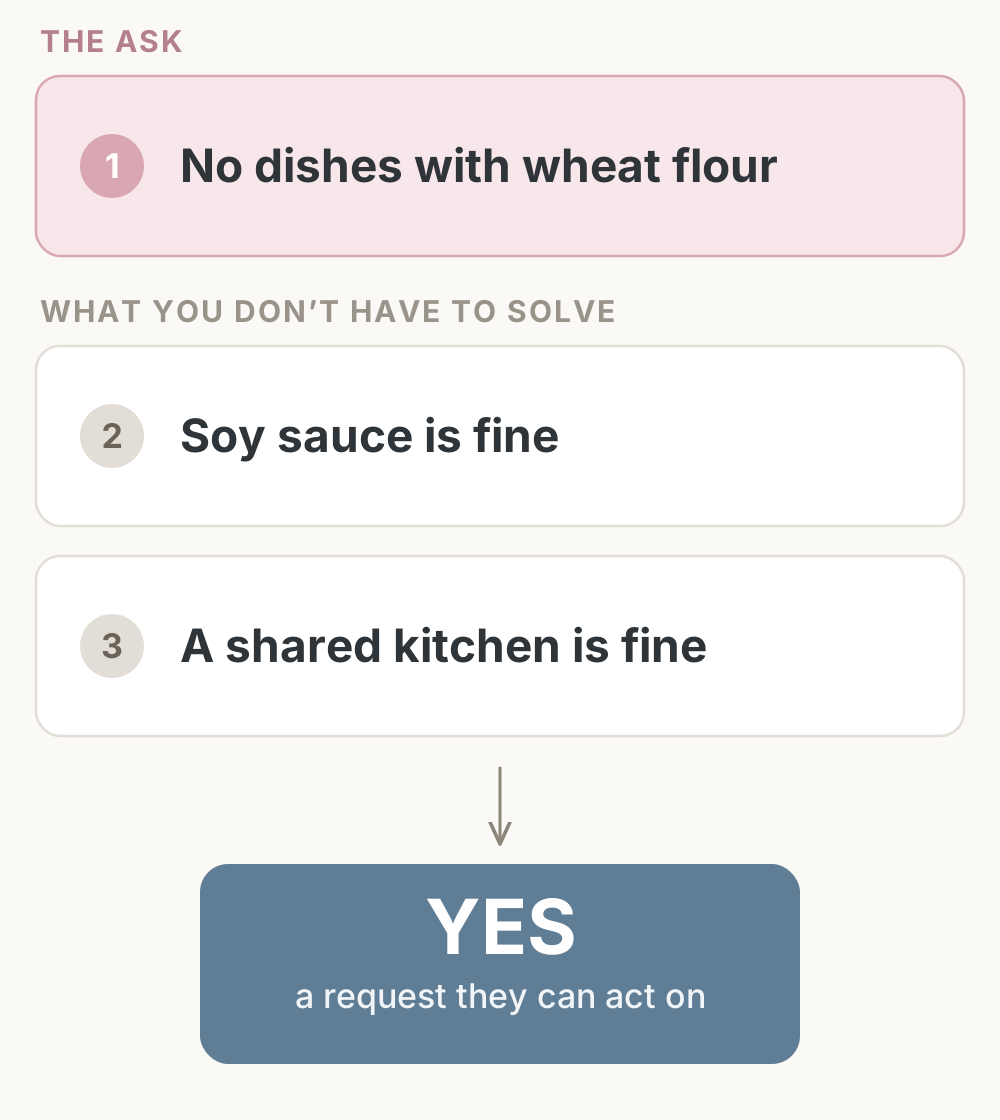
Line one asks. Lines two and three take away the reasons to say no
If your needs are stricter than ours
This is the part we want to be careful about, because getting it wrong in a language you cannot read has real consequences.
Lines two and three are true statements about Komemaru. Soy sauce is fine for her. A shared kitchen is fine for her. If they are not true about you, sending them would hand a restaurant the wrong instructions, and the restaurant would follow them exactly. A kitchen that reads "a shared kitchen is not a problem" will stop thinking about the shared kitchen, which is the correct response to what it was told and the wrong outcome for you.
So if you have celiac disease, or a wheat allergy more serious than a mild one, please do not adapt our message by deleting a line here and there. What you need is wording that states the stricter requirements completely and correctly, and that is genuinely hard to improvise in a second language. We put printable Japanese allergy cards in our Tokyo guide for exactly this reason, so that the wording is settled before you get on the plane.
One honest note about what happens next: the stricter your message, the more restaurants will decline. That is not restaurants being unhelpful. It is restaurants being straight with you about what their kitchen can promise, which is far better than a cheerful yes that turns out to be wrong.
Adjusting it for your own party
- Traveling alone? Delete 1名のみ at the start. The sentence still reads naturally without it
- Two people need it? Change 1名のみ to 2名
- Everyone in the party needs it? Delete 1名のみ as well, and the request simply applies to the booking
Where to send it
We have used this text on Tabelog, Gurunavi, TableCheck, Instagram direct messages, and over the phone. Most Japanese reservation sites have a free-text box for requests at the last step of the booking, usually the final field before you confirm, and that box is where this belongs.
A few things that help:
- Send it in Japanese, even on an English booking page. The person reading it at the restaurant is reading in Japanese
- Small cafes and single-location restaurants often answer faster on Instagram than through a booking site, because the person reading the messages is frequently the owner
- On the phone, read the three sentences slowly and let them respond after each one. They may want to write it down
- Save the text somewhere you can reach with two taps. We keep ours in a notes app, because the moment you need it is always the moment you are standing on a platform with one bar of signal
How to read the reply
The replies we get fall into a few recognizable shapes.
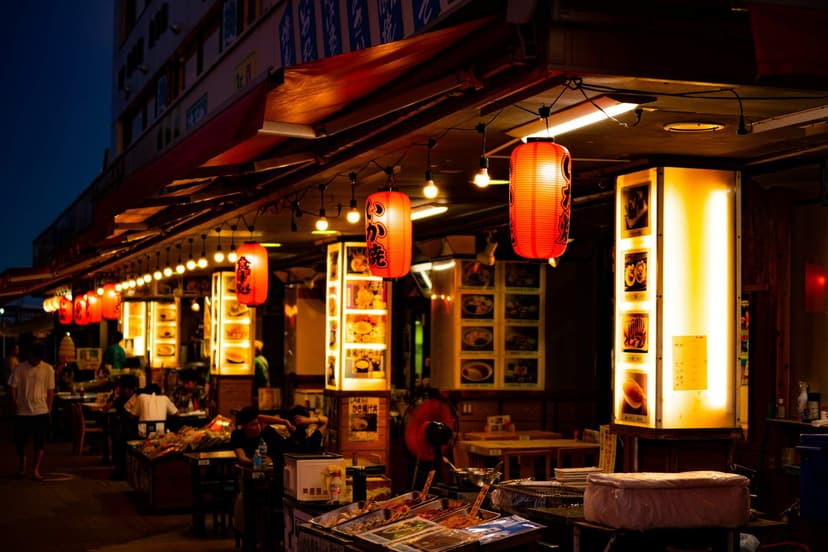
Every one of these is a different answer. Asking early is how you find out which
"We will check and get back to you." This is a good sign, not a brush-off. It usually means someone is going to physically ask the kitchen. In our experience the follow-up tends to be specific and reliable, because it comes from the person who actually cooks.
"We cannot avoid handling wheat in the same kitchen, so if that is acceptable, we can accommodate you." This is a careful restaurant telling you the truth about its limits before you arrive. For us this is a yes. For a celiac reader it may be a no, and the fact that you found that out three days early rather than at the table is precisely the point of asking when you book.
"I am sorry, we cannot do it." It happens. It happened to us in person at a shop where wheat is in everything, and the staff asked us more than once whether we were really sure it would be all right. That is not a shop being unwelcoming. That is a shop refusing to gamble with a guest's health, and we would rather eat somewhere else than talk someone into a risk they can see and we cannot.
When you get a no, thank them and move on.
The habit worth building
Send it when you book. Keep it short. Say plainly what you can eat as well as what you cannot. Accept a no gracefully.
Four small habits, and the ordinary friction of eating gluten-free in Japan gets a great deal smaller.
For the printable Japanese allergy cards, plus 100+ places in Tokyo we have visited ourselves, see the Gluten-Free Tokyo Planning Guide.
This article shares how our own household books restaurants in Tokyo, where one of us has a mild wheat allergy. It is a record of our experience, not medical advice or a safety guarantee. Restaurant policies differ, and your own requirements may be stricter than ours, so always confirm directly with the restaurant. Street photograph by natsuki on Unsplash.