

Souvenir shopping is the part of a Japan trip where gluten-free travelers quietly give up. Walk into any Asakusa sweet shop and the shelves are ningyo-yaki, senbei glazed with soy sauce, dorayaki, castella, monaka. Wheat, wheat, soy sauce, wheat.
Funawa is the exception we keep coming back to, and it has been sitting in the middle of Asakusa since 1902.
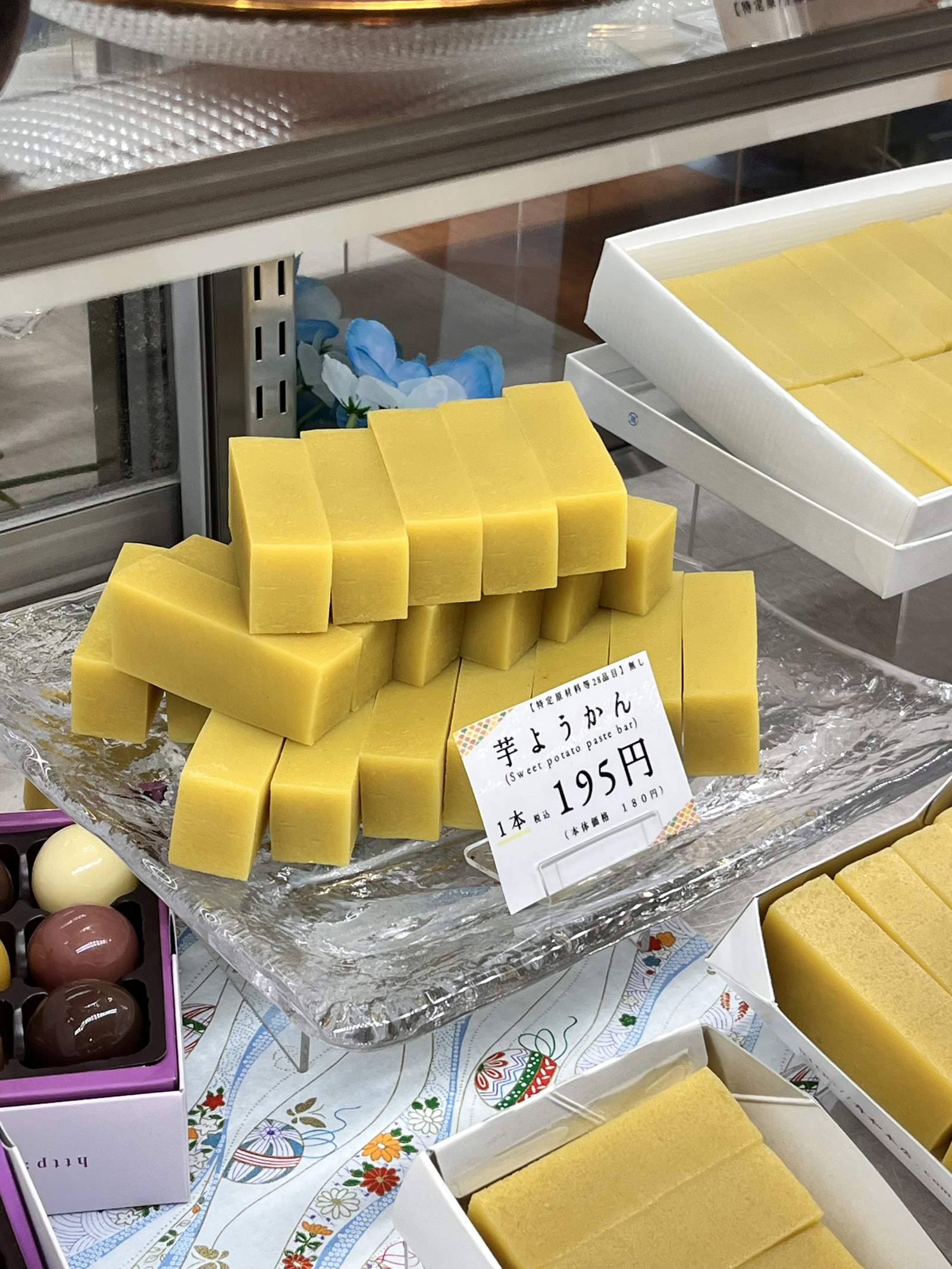
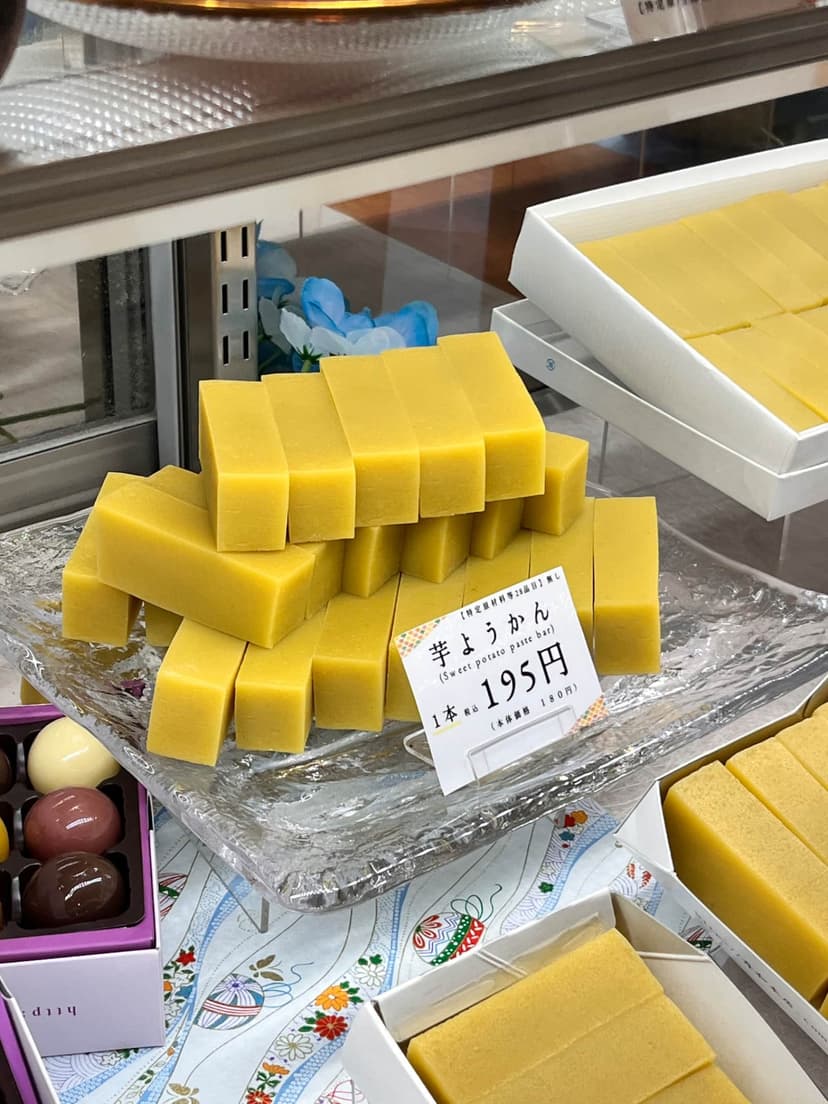
The shop is known for one thing: imo yokan, a firm block of steamed sweet potato that the founder created as an affordable answer to the expensive steamed yokan of the day. The ingredient list is sweet potato, sugar and a little salt. No coloring, no preservatives, no added flavoring. It is a sweet that tastes like the vegetable it came from, and it happens to contain no wheat because there was never any reason to put wheat in it.
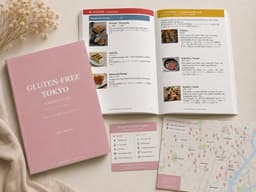
Planning a gluten-free trip to Tokyo?
See the 100+ verified spots in our Tokyo Guide →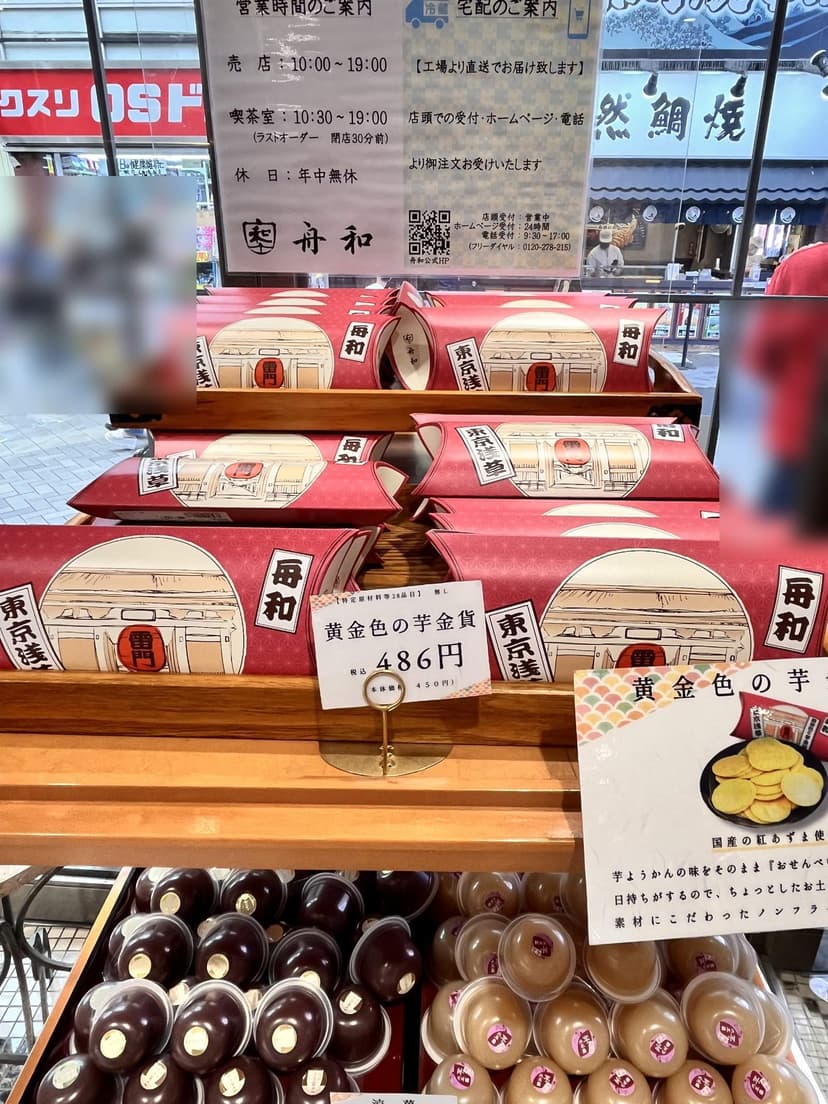
The setting: a 120-year-old shop in the middle of the Asakusa crowd
The main store sits in the Shin-Nakamise shopping area, a few minutes from Senso-ji temple and comfortably inside the route you were already walking. The ground floor is the counter, stacked with boxed sweets and the staff moving quickly through a constant queue of visitors.
There is a tearoom here as well, listed on the shop's own board with its own hours, so this can be a sit-down stop rather than only a shopping one. Funawa also runs cafes under the name Funawa Cafe at other locations in the neighborhood.
What is made without wheat
Here is what we noted going through the lineup on our visit. Treat it as a shopping list to check against the packaging, not as a certification.
- Imo yokan. The signature. Dense, moist, and much less sweet than it looks, with the flavor of roasted sweet potato doing almost all of the work. This is the one to eat in Tokyo rather than carry home
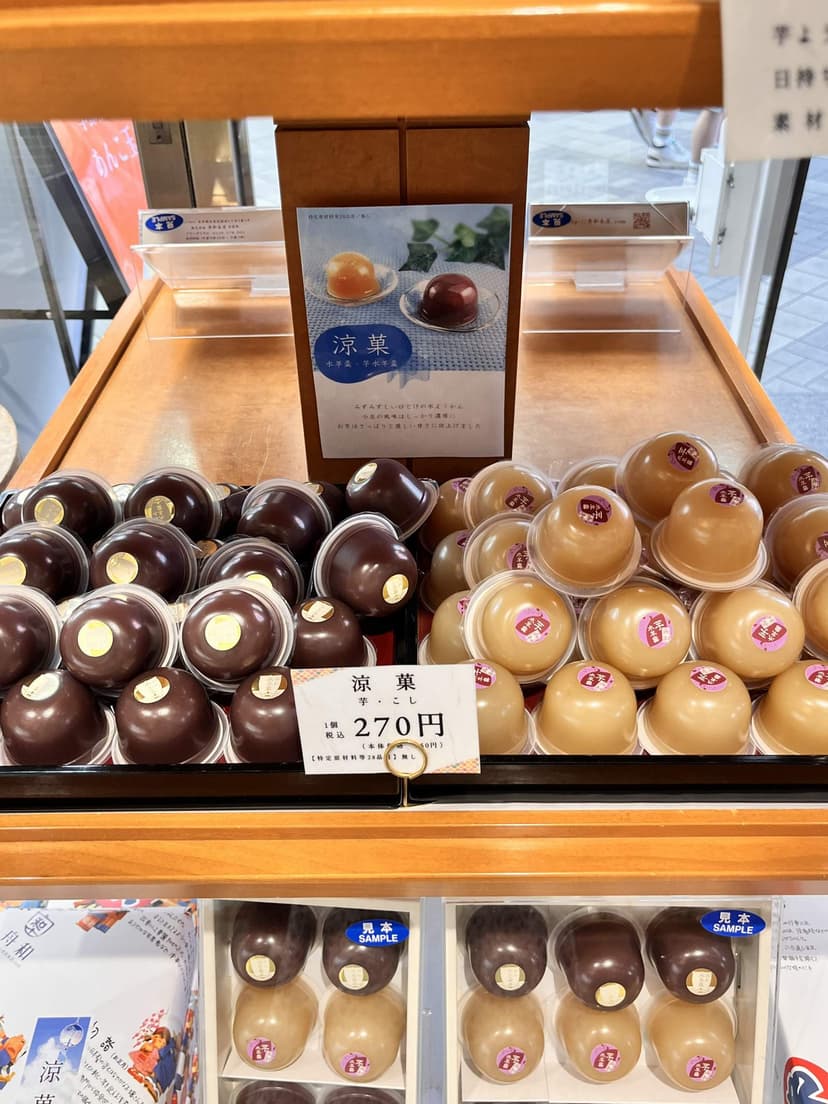
- Ryoka. A summer water yokan, sold in sweet potato and smooth red bean versions. Cooler and lighter than the imo yokan, closer to a jelly
- Kogane-iro no Imo Kinka. The imo yokan pressed thin and baked into a crisp senbei. This is the travel-friendly one, because it keeps far longer than the fresh block
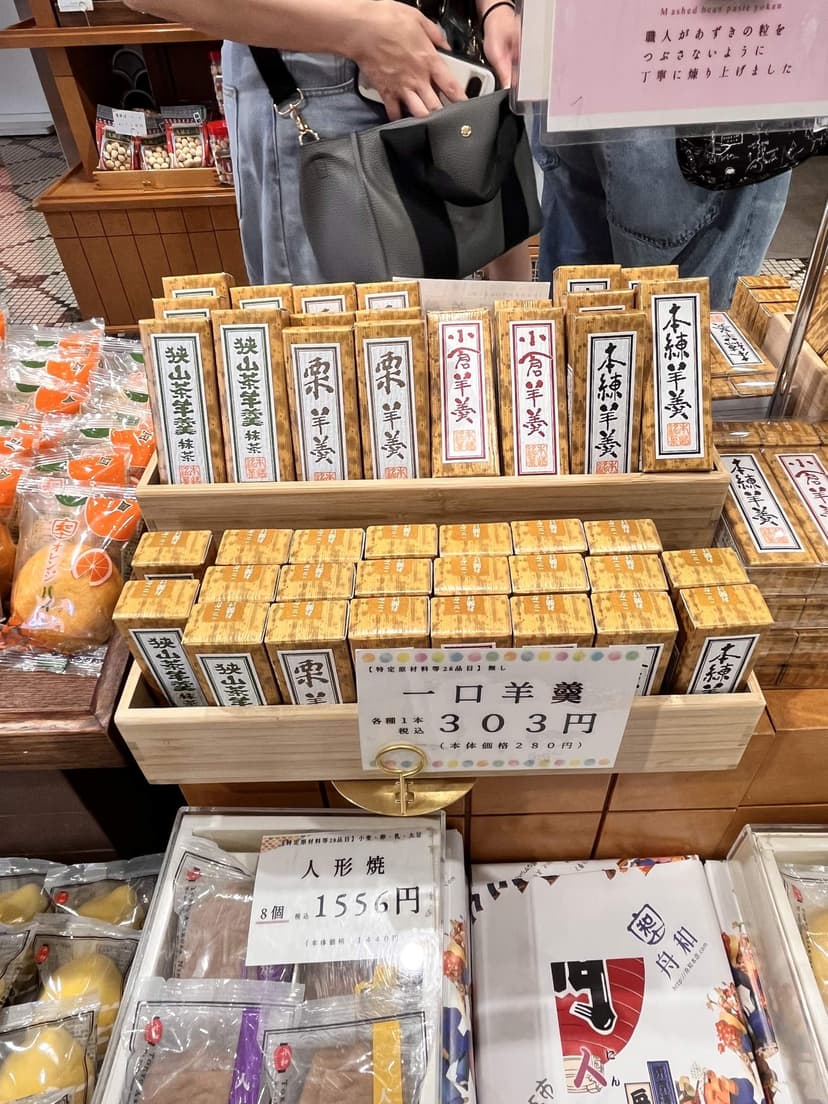
- Hitokuchi yokan. Bite-size yokan in Sayama tea, chestnut, coarse red bean and smooth red bean
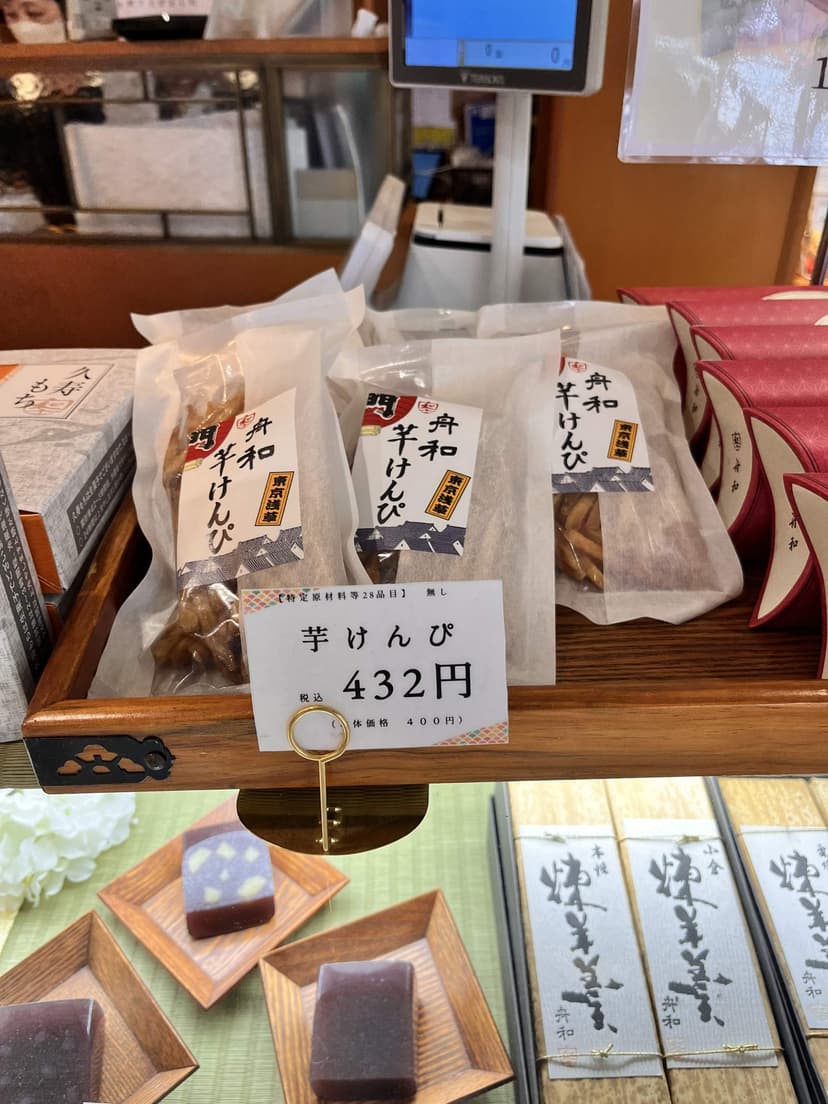
- Funawa imo kenpi. Sweet potato sticks, crunchy and lightly sweetened
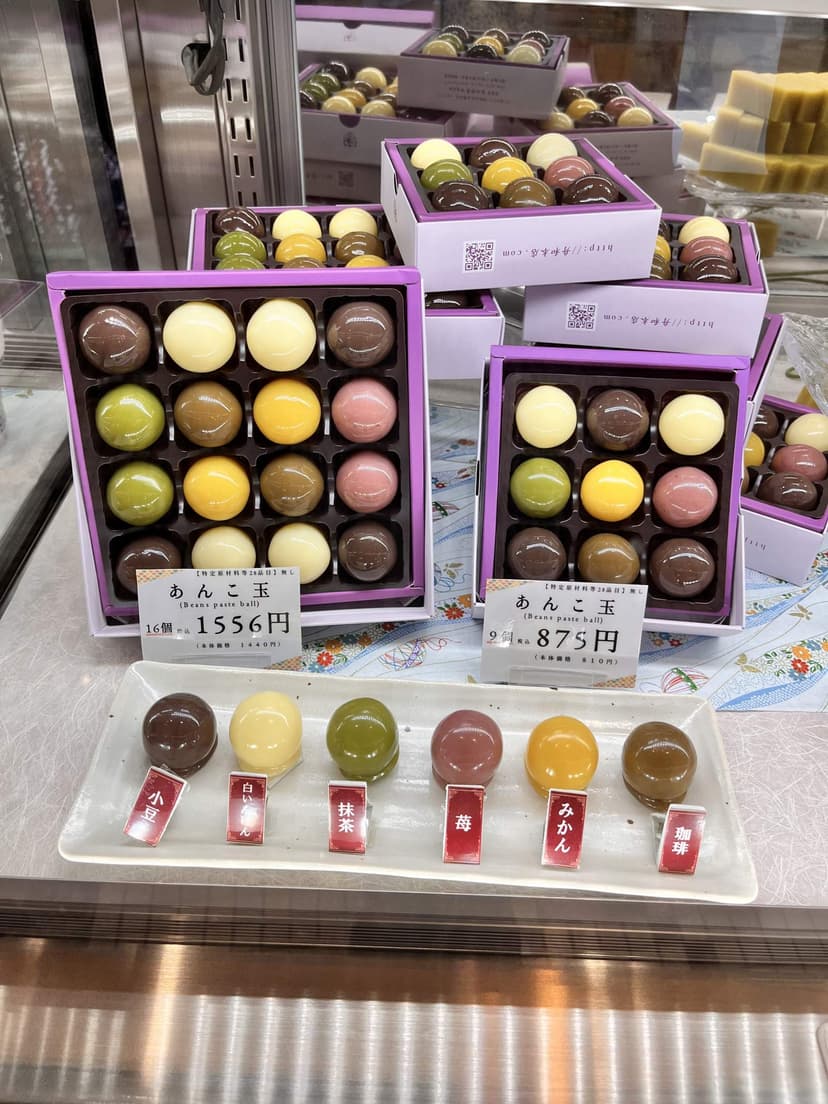
- Anko-dama. Small jelly-coated bean balls in azuki, white kidney bean, matcha, strawberry, mandarin and coffee
The imo yokan is the one we would put in a first-time visitor's hands. It is unlike anything in a Western dessert case: not creamy, not floury, just the sweet potato turned into something dense and clean.
Free: the Gluten-Free Japan Pre-Trip Checklist
What to do, and when, from six months out to your days in Tokyo. Two pages, for your phone or for print.
Get the free checklist →The gluten-free picture, honestly
Funawa is a traditional sweet shop, not a gluten-free one, and that difference matters.
Wheat-based treats are sold on the same counters. While loose or sliced items present a cross-contamination risk during busy counter service, most of Funawa’s products are pre-boxed or individually wrapped, which keeps the risk of direct cross-contamination at the counter relatively low.
However, this does not eliminate the risk of cross-contamination at the factory or production line level. For this reason, visitors with celiac disease or severe wheat allergies should exercise caution.
The website does not publish a full allergen table. There is a nutrition page, but not an allergen matrix, so the practical route to certainty is to ask at the counter or call the customer line printed on their site. That is a normal thing to do here and the staff at a shop of this age are used to product questions.
We only checked the main store. Funawa has other branches and department store counters, and we have not confirmed whether the lineup and handling are identical at those. If you shop at a different location, ask there.
Komemaru, the wheat-allergic half of this team, has a mild allergy rather than celiac disease. The imo yokan has been a reliable, uneventful treat for her for years. That is the experience we can report; a celiac reader should treat the ingredient list as a starting point for a conversation, not as a guarantee about the factory.
What we loved
- It solves the souvenir problem. Almost every classic Tokyo sweet is wheat. This one is a genuine local specialty that simply is not
- It is honest food (Imo Yokan). Three ingredients (sweet potato, sugar, and salt) and a short shelf life, from a shop that has been making it the same way since 1902
- It is already on your route. You do not have to build a detour around it, because Asakusa is on the list anyway
Good to know
- Hours: the board at the main store on our visit read 10:00 to 19:00 for the shop and 10:30 to 19:00 for the tearoom (last order 30 minutes before closing), open year-round. Check the official site before a special trip
- Buy the fresh imo yokan for today, the imo kinka for the flight. No preservatives means exactly what it says
- Cash is not the only option, but a busy tourist counter is faster if you have your payment ready
- Ask before you assume with anything new. The lineup rotates with the seasons, and a seasonal item is not covered by what we checked
- Official site: funawa.jp
Nearby: how to fit it into your day
This is a natural pairing with the temple rather than a separate trip.
- Senso-ji and Nakamise-dori are a few minutes away, and Funawa sits just off the main tourist flow
- The Sumida River and the walk toward Tokyo Skytree start from the same corner of Asakusa
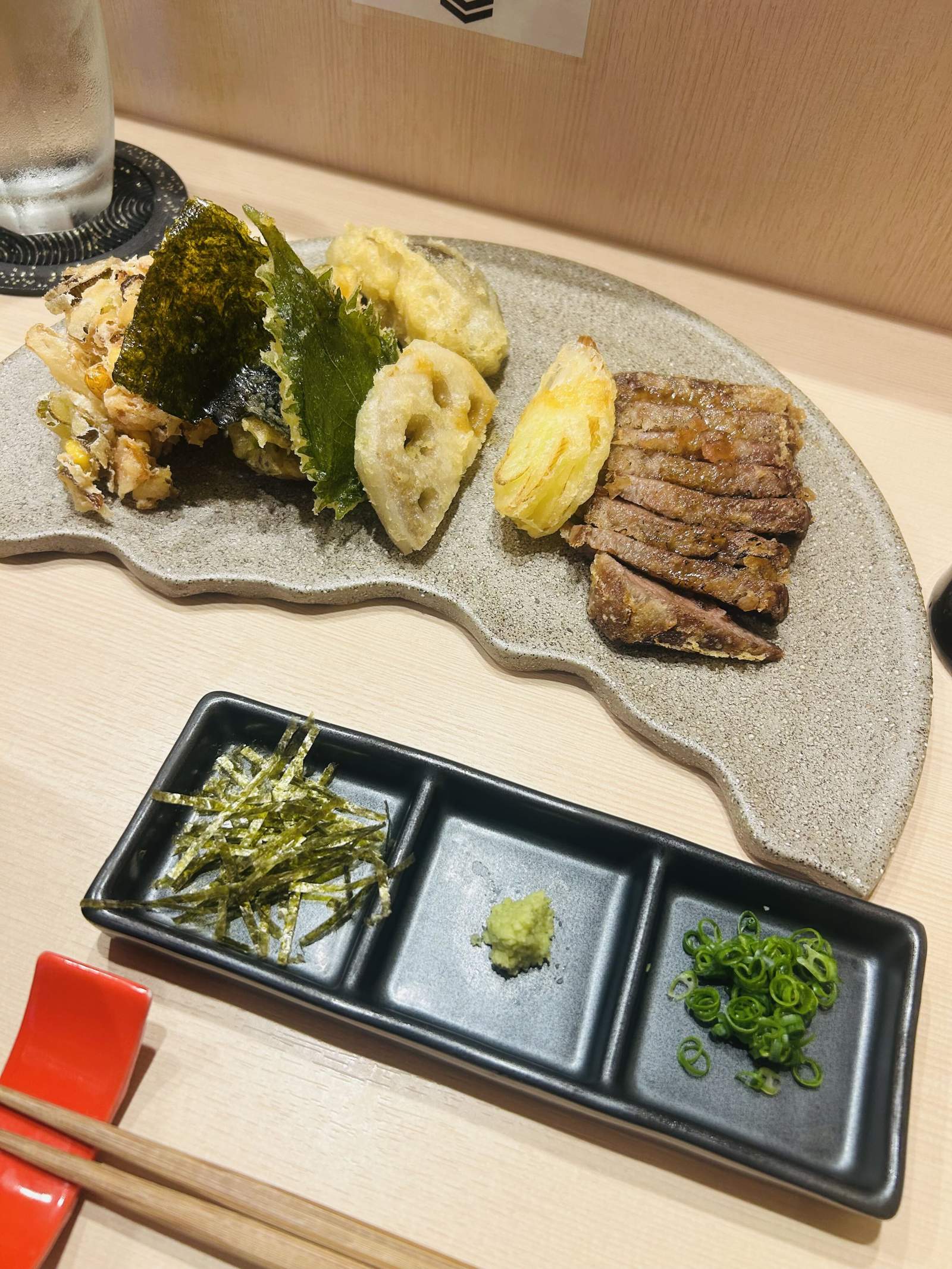
- If you want a full gluten-free meal in the same neighborhood, Asakusa also has an all-gluten-free tempura restaurant, which makes lunch and souvenir shopping a single stop
The bottom line
Gluten-free travelers get used to going home empty-handed from the souvenir shops. Funawa is the rare place where the most famous thing in the shop is the thing you can eat. Buy a box of imo yokan, eat it the same day on a bench by the river, and take the sweet potato senbei home for everyone else.
For more places like this across Tokyo (100+ spots we have visited, with maps and ordering notes), see the Gluten-Free Tokyo Planning Guide.
We visited in June 2026 and paid for our own sweets. This article is a record of our personal experience, not a safety guarantee. Ingredients, lineups and production change; always confirm directly with the shop. Verified, celiac-focused listings live in our Tokyo guide.