
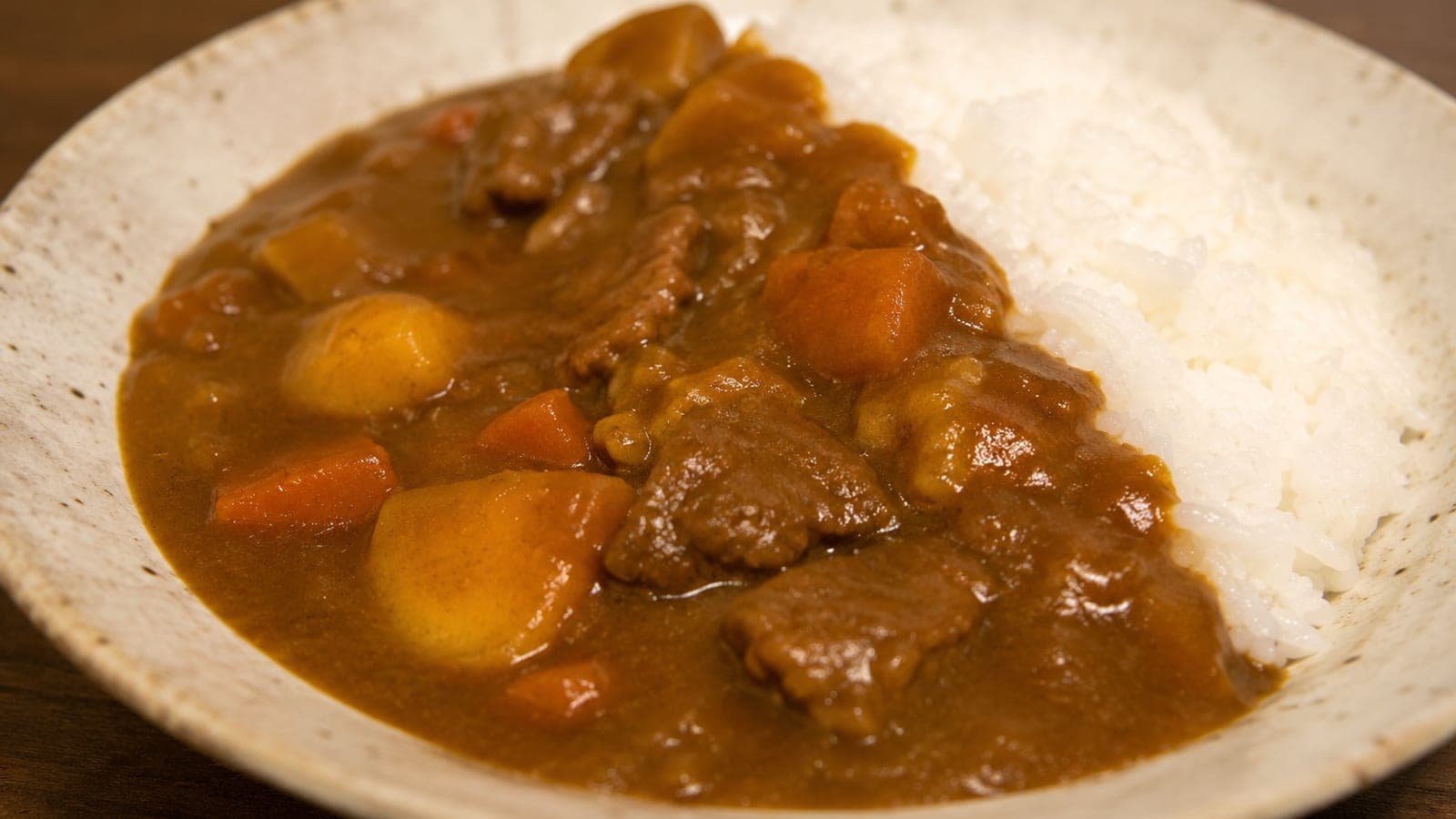
Japanese curry is not gluten-free, and the reason is more structural than most travellers expect.
The sauce is thickened with a roux of wheat flour and fat. Not a pinch of flour to finish, not a coating on something fried. A roux is the thing that makes Japanese curry look and behave the way it does, and it is made of wheat.
Nothing about the plate warns you. It is rice, a brown sauce, some meat and vegetables. There is no pastry, no batter and no noodle anywhere in sight, which is exactly why this dish catches people who have learned to spot the obvious ones.
Planning a gluten-free trip to Tokyo?
See the 100+ verified spots in our Tokyo Guide →Who is writing this
Komemaru has a mild wheat allergy, not celiac disease. Ordinary curry is not something she eats, because the roux is built on wheat flour. We would rather tell you the allergy part at the top than bury it.
What we can offer is not celiac experience. It is what is actually in the block of roux, in Japanese, read off the back of the packet in our own kitchen. Every safety judgement here is written for a celiac reader, not for us.
Japanese curry is not Indian curry
This is the piece of context that makes everything else make sense, and it is rarely explained to visitors.
Curry did not travel to Japan from India. It arrived in the Meiji era by way of the British Royal Navy, and British cooking at the time thickened its sauces with a roux of flour and fat. Japan adopted the dish complete with the method, and the method never left.
So Japanese curry is not a spiced sauce that happens to be thick. It is closer to a stew: mild, glossy, sweet-edged, thick enough to sit on rice without running. That texture is the wheat flour doing its job. The same roux logic sits behind hayashi rice and cream stew, which are sold in nearly identical blocks on the same supermarket shelf.
If you have arrived in Japan with the reasonable assumption that curry is a naturally gluten-free cuisine, this is where the assumption breaks.
What is in a block of curry roux
Curry at home in Japan is almost never built from spices. It is made from a curry roux block (カレールー), a slab of solidified roux sold in a cardboard box, broken into squares and dropped into a pot of simmered meat and vegetables at the end.
The ingredients, in the order you will typically find them:
- Wheat flour (小麦粉)
- Edible oils and fats, often palm oil
- Curry powder and other spices
- Salt, sugar, and various seasonings including soy sauce and other wheat-carrying flavourings
Wheat is at or near the top of that list. It is not a trace, and it is not an additive that a different brand might leave out.
Restaurant curry works the same way. Some kitchens make their own roux from scratch, some use a commercial base, but in an ordinary curry shop, flour-thickened is the format. This also means the sauce is made in quantity before service, in one pot, for everybody. A single diner cannot have it made differently, in the same way one guest cannot be served a separately simmered stock.
Free: the Gluten-Free Japan Pre-Trip Checklist
What to do, and when, from six months out to your days in Tokyo. Two pages, for your phone or for print.
Get the free checklist →What is on the plate that is fine
Worth being clear about, because it is nearly everything:
- Rice
- Potato, carrot and onion, the standard three
- Beef, pork or chicken, plain before the sauce
- Boiled egg, on the versions that come with one
The plate is a gluten-free meal with a wheat sauce poured over it. That is the same shape as sukiyaki, where the pot is full of naturally gluten-free food cooking in a wheat-based liquid.
The two standard sides need more care. Fukujinzuke (福神漬), the red pickle spooned on beside the rice, is seasoned with soy sauce. Rakkyo (らっきょう), the pale pickled shallots, are usually a vinegar pickle and more likely to be fine, though sweetened versions vary. Neither is worth risking for a garnish.
Safety note
Curry rice looks safer than almost anything else on a Japanese menu, and it is one of the least safe things on it.
There is no bread, no batter, no noodle and no obvious wheat in the picture. Two spoonfuls in, nothing about the taste tells you either, because the flour is there for texture rather than flavour.
This is the dish we would flag hardest to someone newly diagnosed and travelling here. Curry rice is a national staple: it is on kids' menus, in school lunches, in every family restaurant, in convenience stores, at ski resorts and in station cafés. It is exactly the meal a tired traveller orders as the safe option.
Where curry turns up in other forms
Once the roux is in the kitchen, it goes into other things.
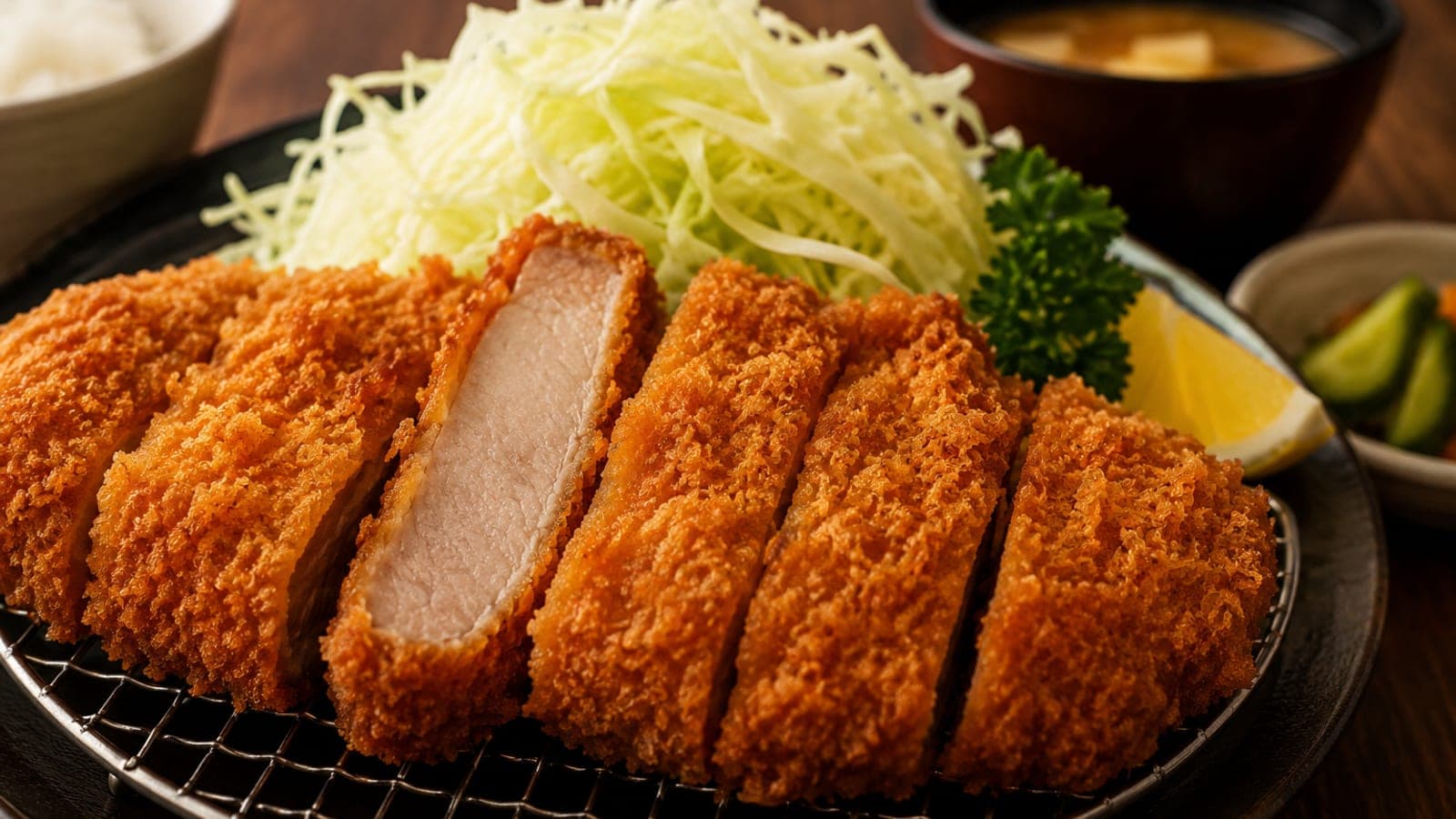
- Katsu curry (カツカレー): curry rice with a breaded cutlet on top, so wheat in both halves. See our page on tonkatsu
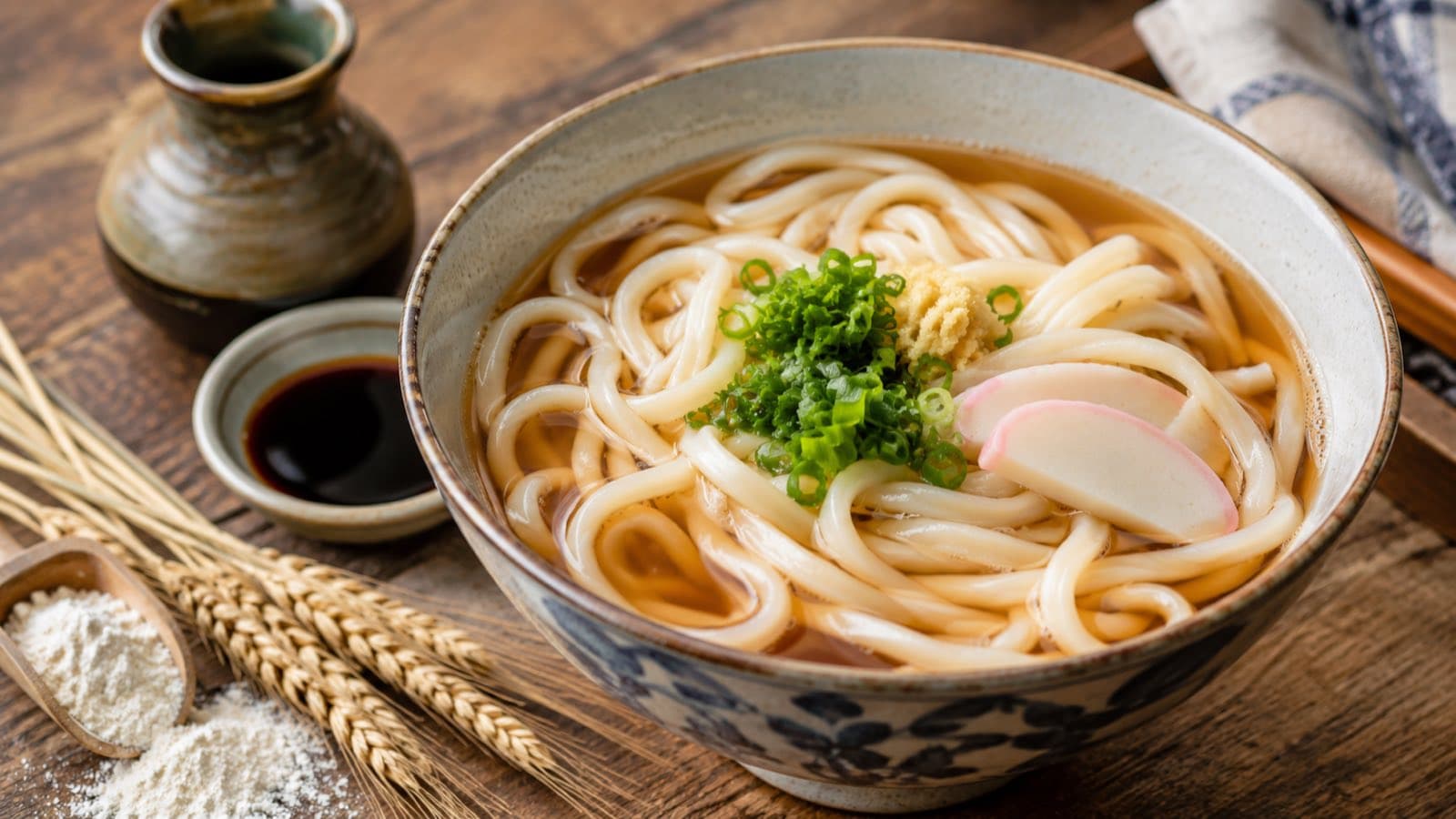
- Curry udon (カレーうどん) and curry soba: wheat noodle, wheat sauce. See our page on udon
- Curry pan (カレーパン): curry inside a bread roll, deep fried. A bakery item and clearly out
- Curry man (カレーまん): the steamed bun sold at convenience store counters in winter, wheat dough
- Dry curry and curry fried rice: often started from the same roux or a curry powder blend that includes flour
- Retort pouch curry: the shelf-stable pouches in every supermarket and convenience store are the same formulation
Soup curry (スープカレー), the Sapporo style, is a genuine question mark rather than a straightforward no. It is thin and broth-like by design, so it does not need a roux, and some shops build it purely from stock and spices. Others still use a flour base or a soy-sauce-based seasoning. We have not surveyed enough shops to tell you how it usually goes, so treat it as a promising thing to ask about rather than a safe order.
Curry powder is a different product
Worth separating, because the names are confusing in English.
Curry powder (カレー粉) is a spice blend, and spice blends are generally free of wheat, though a cheap blend can contain a starch as a bulking agent. Curry roux (カレールー) is the flour-and-fat block described above. When a recipe or a menu says curry powder, it is talking about the spices. When it says roux, it is talking about the thickener.
The distinction matters because it points at the way out.
The routes that actually work
Allergy-formulated products. Japan has a labelling system for a defined list of allergens, wheat among them, and manufacturers make products specifically for children who cannot eat them. Retort pouches of curry marked as free of the specified allergens are sold in ordinary supermarkets and drugstores, usually near the baby and toddler food rather than with the curry. They are mild, they heat in a few minutes in boiling water, and they need no kitchen beyond a kettle and a bowl. For a traveller in a hotel room, this is the most practical curry in Japan.
Rice flour roux, which is what we cook with. Roux made with rice flour instead of wheat flour is sold in ordinary supermarkets here, and in most shops it is simply in the curry aisle with everything else rather than tucked away in a health food corner. The packet says グルテンフリー (gluten-free) on the front. It is not a specialist item you have to order online, though which branches carry it varies and a small supermarket may have none.
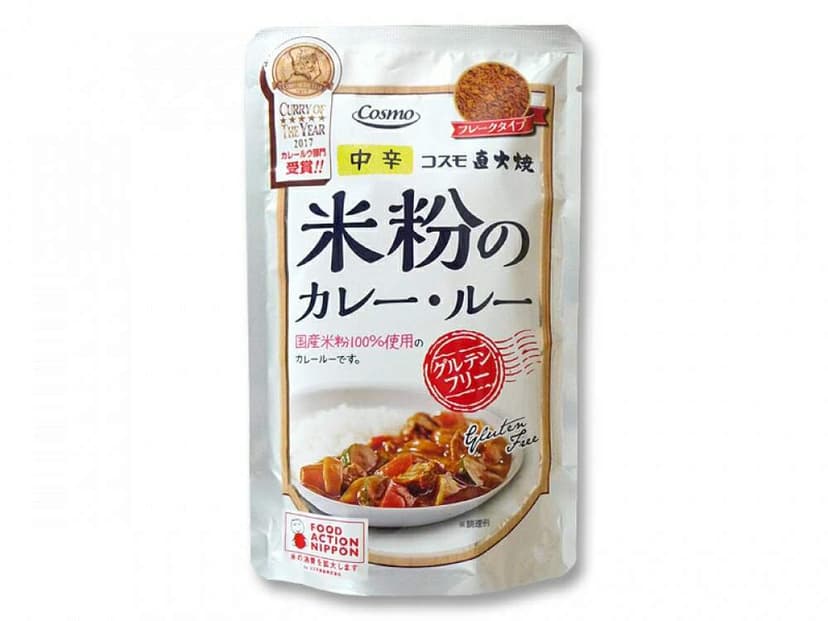
The kind of packet to look for. 米粉 is rice flour, and the gluten-free wording is printed on the front
The one in the picture is a flake type in a foil pouch rather than a solid block, so it stirs into the pot without needing to be broken up. Its maker describes it as gluten-free and made with rice flour grown in Japan, one hundred percent of the flour in it (product page in Japanese). Others come as blocks and behave exactly like the ordinary ones: drop them in at the end and let them melt.
One distinction is worth holding on to, because two different claims end up printed on these boxes. A roux can be made without wheat flour and still not be sold as gluten-free: some of them carry a line saying the factory also handles wheat, and some simply make no gluten-free claim. The wording on the front tells you what the maker is aiming at, and the small print on the back is what decides it.
From spices. Curry can also be made with no roux at all. Onion, garlic and ginger cooked down, curry powder and whatever meat and vegetables you have, then simmered. If you want the Japanese thickness, a spoonful of rice flour or potato starch slaked in water does what the roux was doing. This is the version that lets you use a rental kitchen without hunting down a particular product.
We have not cooked curry this way ourselves, so we will not tell you how it compares to the roux we use. What we can tell you is that building curry from spices is a serious hobby in Japan, with its own shelf in the bookshop and a lot of people who spend their weekends on it, so recipes and ready-made spice sets are not hard to come across here.
Reading the box. If you are going to buy an ordinary supermarket product, the ingredients are printed on the back in Japanese and 小麦 is the word for wheat. It is worth learning those two characters before you shop here, because they appear on far more packets than you would guess.
Restaurants that make curry without wheat
They exist, and they are somewhere you go on purpose rather than somewhere you find by wandering.
There are plenty in Tokyo, and the other large cities have them too. Some are gluten-free cafes and restaurants that put a curry on the menu alongside everything else, built from a rice flour roux or from spices. Some are curry specialists who make the sauce from stock and spices because that is how they cook, so the absence of wheat is a property of the recipe rather than a policy. In both cases the shop usually says so on its own site or Instagram, because it is the reason people cross the city to eat there. Outside the larger cities it thins out quickly, and it is worth looking things up before you travel rather than after you arrive somewhere hungry.
The chain option. CoCo Ichibanya, the curry chain with branches all over the country, has a curry made without the seven allergens that Japanese labelling law covers, wheat among them. The sauce is brought to the table sealed in its pouch rather than ladled out of the kitchen's pot, and the chain says on its own menu page that this is deliberate, for safety (official menu page in Japanese). Not every branch stocks it, which the company also states.
Komemaru has eaten it, and it went fine for her. It is a gentle, mild curry with the spicing kept soft, which makes sense for a dish built to be eaten by people who have to avoid an ingredient, children among them. If curry has been the thing you keep walking past on this trip, it is worth knowing this one is there.
One caveat to carry with you. Japan's specified allergen list covers wheat but not barley or rye, so free of the specified allergens is a narrower claim than gluten-free. Komemaru's wheat allergy is also not celiac disease, so what went fine for her is not the same test you need to apply. Read the allergen table rather than trusting the category name.
What to ask before you order
Curry is one of the more useful dishes to ask about, because the answer is a single ingredient rather than a chain of them. If the roux has wheat flour in it, nothing else about the plate matters.
カレーのルウに小麦粉は使われていますか?
小麦粉を使っていないカレーはありますか?
福神漬けの味付けに醤油は使われていますか?
What each line says:
- Is wheat flour used in the curry roux?
- Do you have a curry made without wheat flour?
- Is soy sauce used to season the fukujinzuke pickle?
Read aloud, roughly:
Karee no ruu ni komugiko wa tsukawarete imasu ka?
Komugiko o tsukatte inai karee wa arimasu ka?
Fukujinzuke no ajitsuke ni shouyu wa tsukawarete imasu ka?
The word to listen for in the answer is 小麦粉 (komugiko), wheat flour. It is also the word to look for on a packet, and learning to recognise those three characters does more for you in a Japanese supermarket than almost anything else. The one to look for on the good side is 米粉 (komeko), rice flour.
The short version
Japanese curry is thick because of wheat flour, and it is thick by definition. The roux is the dish. Everything else on the plate is fine, which makes it maddening rather than complicated, and it is one of the few Japanese dishes where nothing on the table hints at what is in it.
In an ordinary curry shop, it is not a dish we can point a celiac traveller towards. In a restaurant that has chosen to make it without wheat, and Tokyo has plenty of them, it is a different question entirely. In a hotel room with a kettle, an allergy-formulated pouch makes it a solved problem, and in a rental kitchen a rice flour roux off the supermarket shelf turns it back into an ordinary weeknight dinner.
For the places in Tokyo we have visited and checked ourselves, see the Gluten-Free Tokyo Planning Guide.
This article describes what goes into Japanese curry and how our own household cooks around it, in a house where one of us has a mild wheat allergy rather than celiac disease. It is a record of our experience and our reading of ingredients, not medical advice or a safety guarantee. Products and restaurant recipes vary, so always read the label and confirm directly with the restaurant. Information is current as of August 2026.