

Tempura is not gluten-free. The batter is wheat flour. There is no seasoning to swap out here, because the wheat is not in the seasoning. It is the coating itself.
What is worth reading past that sentence is that tempura presents three separate problems, and travellers usually solve only one of them. The batter is the obvious one. The oil and the dipping sauce are the two that quietly stay unsolved.
Who is writing this
Planning a gluten-free trip to Tokyo?
See the 100+ verified spots in our Tokyo Guide →Komemaru has a mild wheat allergy, not celiac disease. Ordinary tempura is not something she eats, because the batter is wheat flour and there is no way around that. We say the allergy part at the top rather than in a footnote.
That difference matters more on this dish than on most. Komemaru can eat rice flour tempura that was fried in oil shared with wheat-coated food, because her allergy is mild and that level of exposure does not reach her threshold. A celiac reader cannot read our plate as a guide to their own. Gluten from wheat batter stays in the oil, so the same dish that is fine for her is not fine with celiac disease.
What we can offer is not celiac experience. It is what is in the batter and the sauce, in Japanese, read off the packets in our own kitchen. Every safety judgement here is written for a celiac reader, not for us.
Problem one: the batter
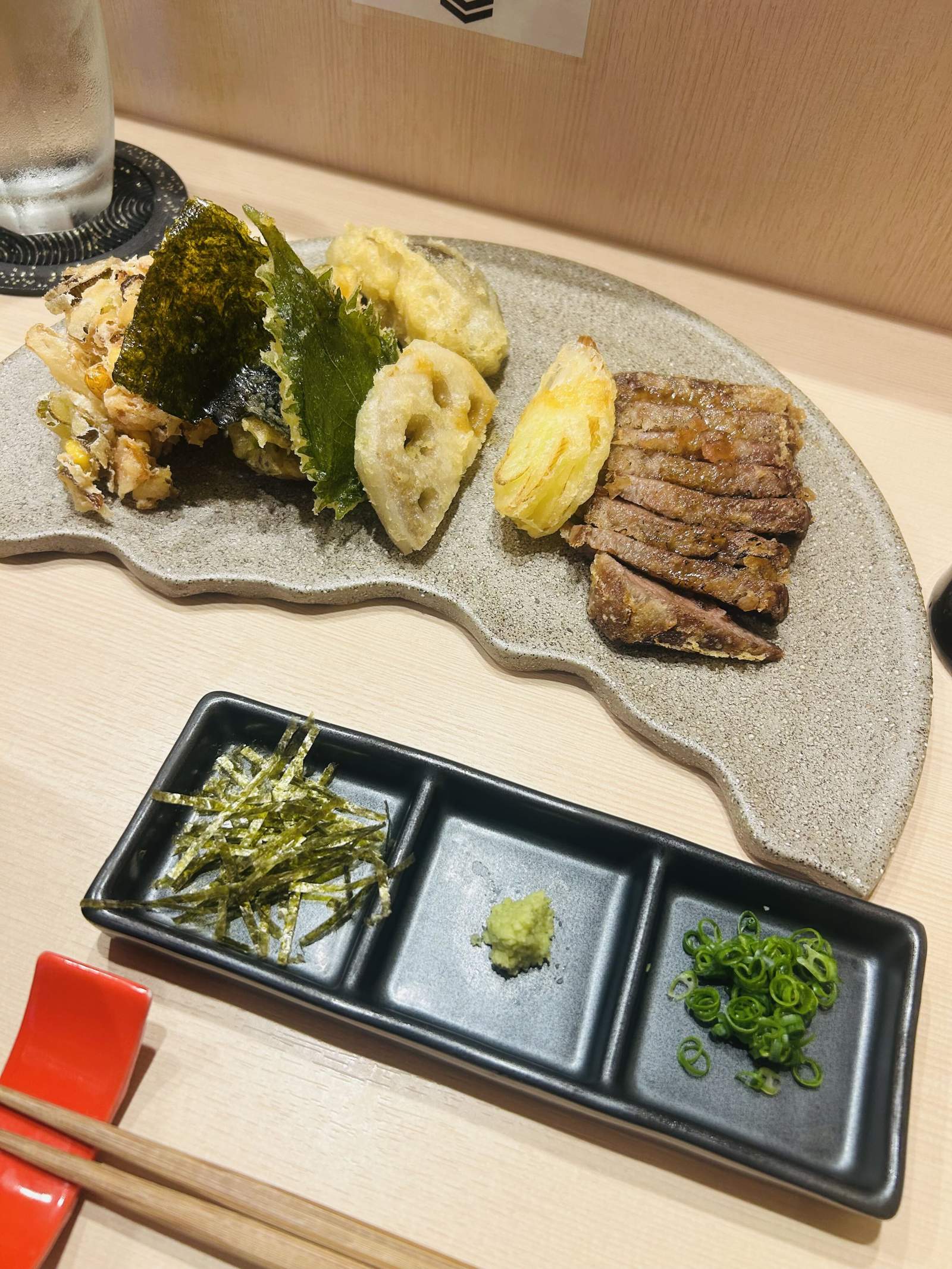
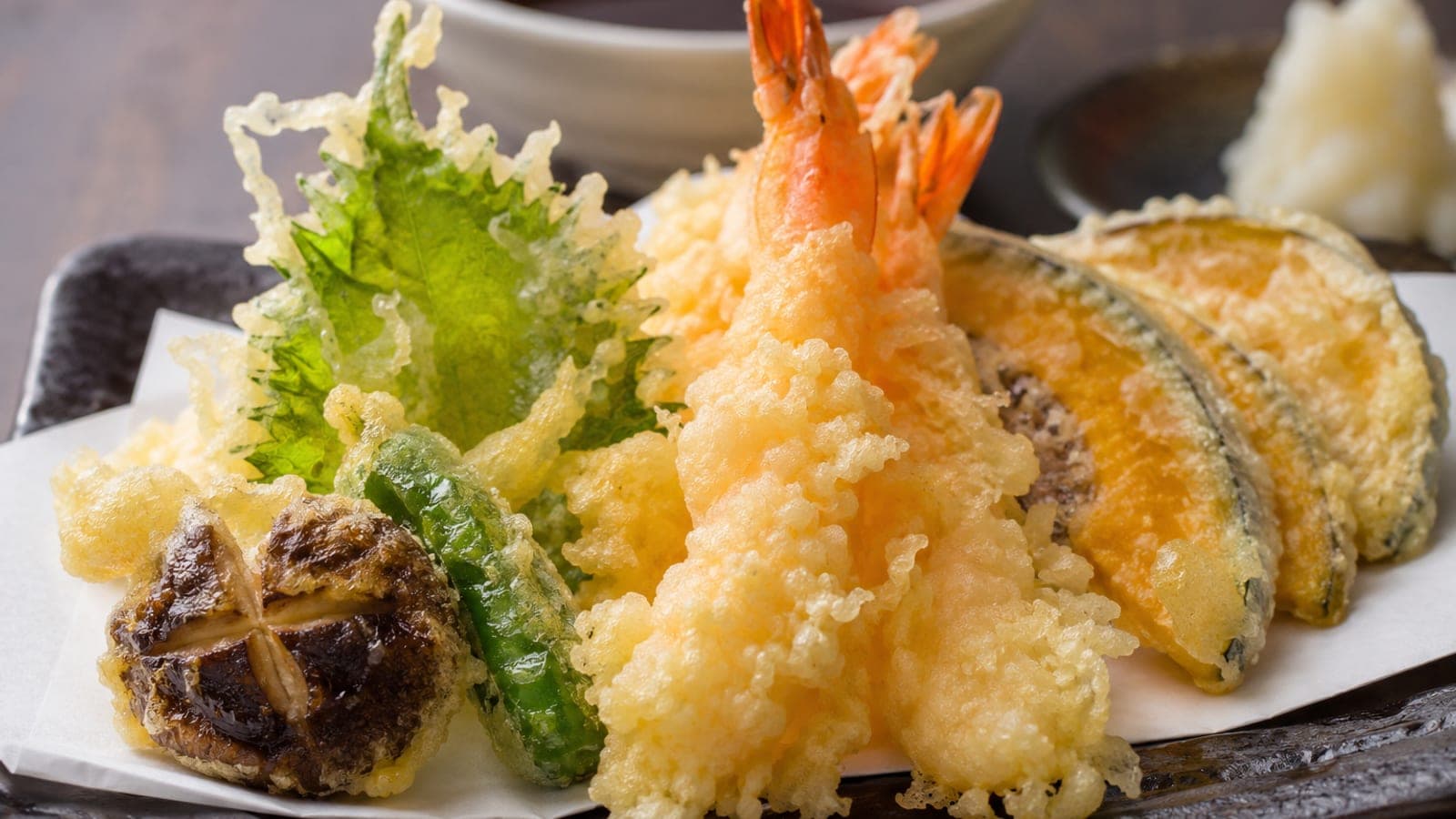
Tempura is seafood and vegetables coated in a thin batter and deep fried. The batter is three things: wheat flour, cold water and egg, mixed briefly and deliberately badly, so that lumps remain and the gluten does not develop. The whole craft of it is keeping the coating thin, dry and light.
That is worth understanding, because it tells you why the wheat cannot simply be left out. Tempura is defined by its coating. Take the coating away and you have grilled prawns.
The prawns themselves are not the issue, and neither is anything else that goes inside:
- Prawn, squid, whitefish, scallop, eel
- Pumpkin, aubergine, sweet potato, shiitake, shishito, lotus root, green beans
- Shiso leaf, nori
All naturally gluten-free. All wrapped in wheat before they reach the table.
Problem two: the oil
This is the part that turns a solvable batter question into a hard restaurant question.
A kitchen fries everything in the same oil. At a tempura counter that may mean only tempura, but at an izakaya, a family restaurant or a set-meal shop, the same fryer handles karaage dusted in flour, tonkatsu and prawns in panko breadcrumbs, and korokke croquettes. Wheat goes into that oil all day.
So a rice-flour item cooked in a shared fryer is not a gluten-free item. It is a wheat-free batter fried in wheat.
This is why, for tempura specifically, the useful question is not "do you have a rice flour option" but "is there any wheat batter in this kitchen at all". Those are very different questions, and only the second one has a satisfying answer.
Free: the Gluten-Free Japan Pre-Trip Checklist
What to do, and when, from six months out to your days in Tokyo. Two pages, for your phone or for print.
Get the free checklist →Problem three: the dipping sauce
Tempura is served one of two ways: with tentsuyu (天つゆ), a warm dipping sauce, or with salt.
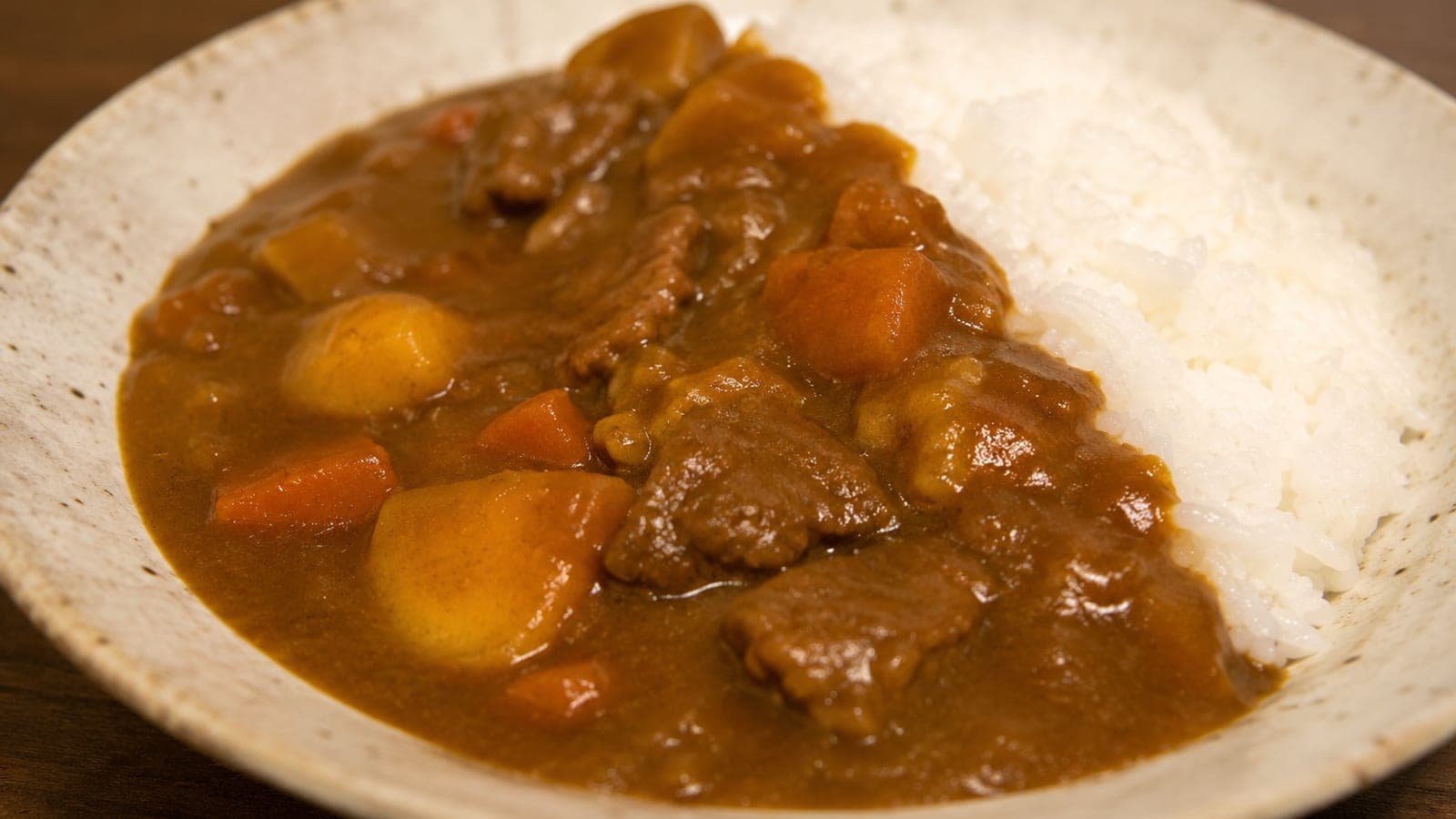
Tentsuyu is dashi seasoned with soy sauce and mirin, so it carries wheat through the soy sauce. It usually arrives with grated daikon stirred in.
Salt is a real option and worth knowing about. Many tempura restaurants offer flavoured salts as standard, sometimes matcha salt or yuzu salt, and asking for salt rather than sauce is an ordinary request rather than a special one. It is a genuinely useful thing to know. It also solves the smallest of the three problems.
Safety note
A rice-flour option in a wheat kitchen is not a gluten-free dish.
If a restaurant offers to fry your tempura in rice flour batter, that is a kind gesture and it changes one variable. Unless the kitchen has a dedicated fryer, or no wheat batter at all, the oil is carrying wheat from every other order that day.
For a mild wheat allergy, shared oil may sit below the threshold, and in our house it does. For celiac disease it does not, and this page is written to that standard.
The version that works is a kitchen where wheat batter does not exist. Those restaurants are rare, so it is worth looking one up in advance rather than hoping the place near your hotel will improvise.
Where tempura appears without the word
Tempura is an ingredient in other dishes as often as it is a dish itself.
- Tendon (天丼): tempura on rice, with a sweet soy-based sauce poured over
- Tempura soba and tempura udon: a wheat noodle in a soy-based broth with a prawn on top, which is three sources in one bowl
- Tenmusu (天むす): a rice ball with a small prawn tempura inside, a Nagoya speciality that turns up at station kiosks and some convenience stores
- Kakiage (かき揚げ): shredded vegetables and small seafood bound together in batter, so it is batter all the way through rather than as a coating
- Tenkasu (天かす) or agedama (揚げ玉): the loose fried batter bits, scattered onto noodles for free and mixed into takoyaki and okonomiyaki
Tenkasu deserves the emphasis. It is one of the easiest ways to eat wheat in Japan without noticing, because it is a free garnish rather than an ingredient anyone announces. On a bowl of noodles it looks like a texture. In a bowl of udon at a standing shop, it may already be in there.
Things that look like tempura and are not
Karaage (唐揚げ) is marinated fried chicken. The coating may be wheat flour, potato starch, or both depending on the cook, and the marinade is usually soy sauce based. So even a starch-coated karaage is not a reliable way around wheat.
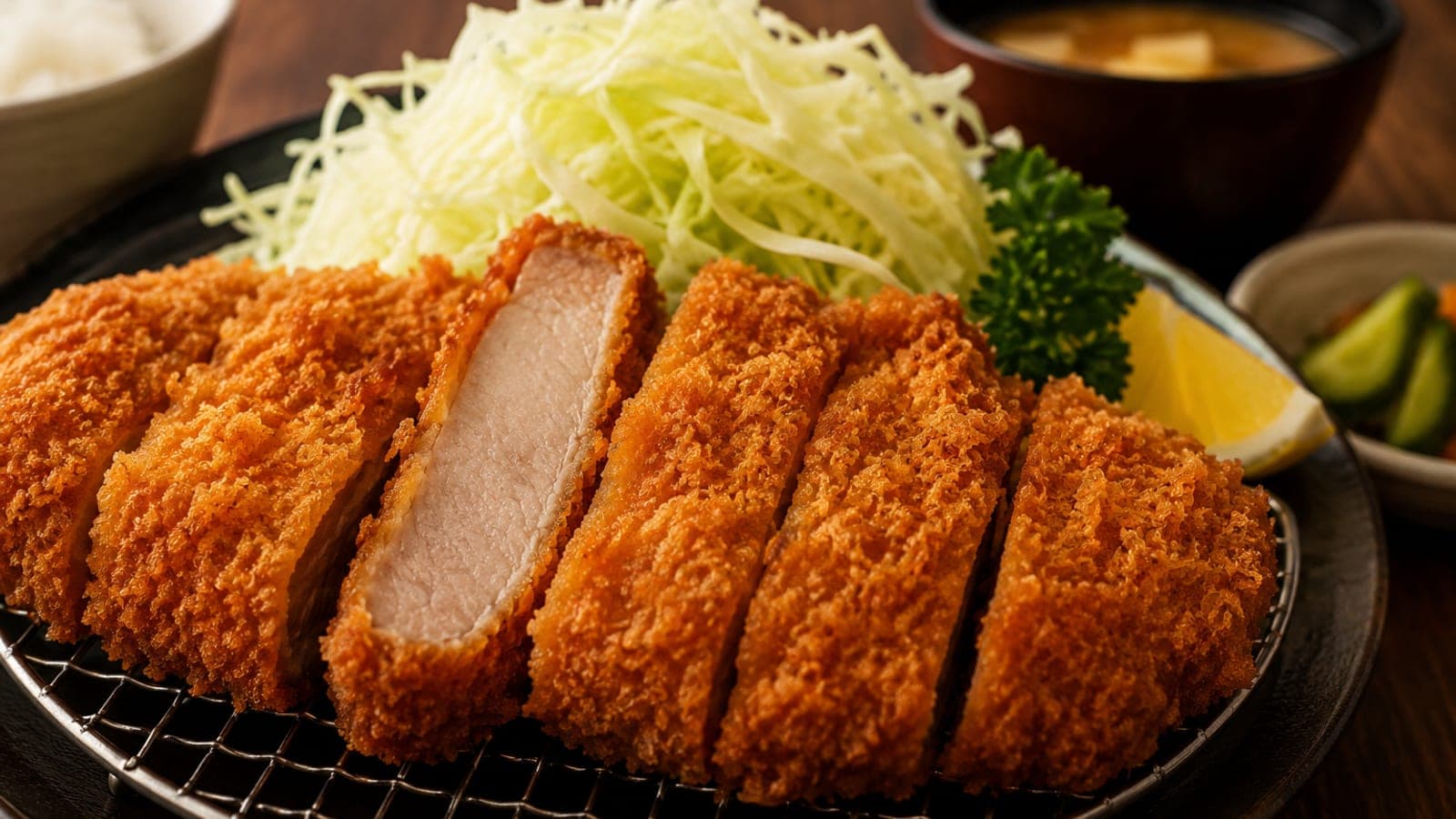
Furai (フライ), as in ebi furai (prawn) or kaki furai (oyster), is breaded in panko rather than battered. Panko is bread. This is the same coating tonkatsu uses, and we go through it on our page on tonkatsu.
Agedashi dofu (揚げ出し豆腐) is tofu dusted in starch, fried, and served in a soy-based broth. The dusting is often potato starch rather than flour, which makes it one of the more promising items on an izakaya menu, but the broth it sits in is soy sauce. Worth asking about rather than assuming.
Where the exceptions actually are
Tempura differs from most dishes on this site in one structural way: a fully gluten-free tempura restaurant exists in Tokyo.
There is a restaurant in Asakusa called Tempura Asakusa SAKURA, which states that every dish on its menu is gluten-free and that the batter is rice flour. Because there is no wheat batter in the kitchen, the shared-oil problem does not arise there. That is the structural difference between a restaurant with a gluten-free option and a restaurant that is gluten-free.
Restaurants set up that way are not common. We have eaten there, and our record of the visit is here.
Making it at home
Rice flour tempura is not a compromise version. It fries up crisp and light, and some Japanese home cooks make it that way by choice, for the crispness rather than for any allergy.
Rice flour tempura mix (米粉の天ぷら粉) is sold in some supermarkets, usually beside the wheat tempura mixes. Check the ingredients, because some mixes labelled as rice flour contain wheat flour as well.
Three things that matter more than the flour:
- Keep the water ice cold. Cold batter hitting hot oil is what makes the coating light
- Mix badly and briefly. Lumps are correct. Overmixing makes the coating heavy
- Use fresh oil, which in your own kitchen is automatic and is the entire problem in someone else's
For the sauce, build tentsuyu from dashi, gluten-free soy sauce and mirin, roughly four parts dashi to one part each of soy sauce and mirin, warmed through.
Grated daikon is optional. Tempura tastes good without it, so treat this as a nice extra rather than a missing ingredient.
If you do want it, a whole daikon is far more than you need. Supermarkets sell them cut in half or into thirds, and a piece that size is plenty. The harder part is the tool. Grating daikon needs a grater (おろし器, oroshiki), and supermarkets do not usually stock them. The shops that reliably do are hundred-yen shops such as Daiso and Seria, and homeware shops such as Nitori and Muji.
There are two common shapes, and either one works:
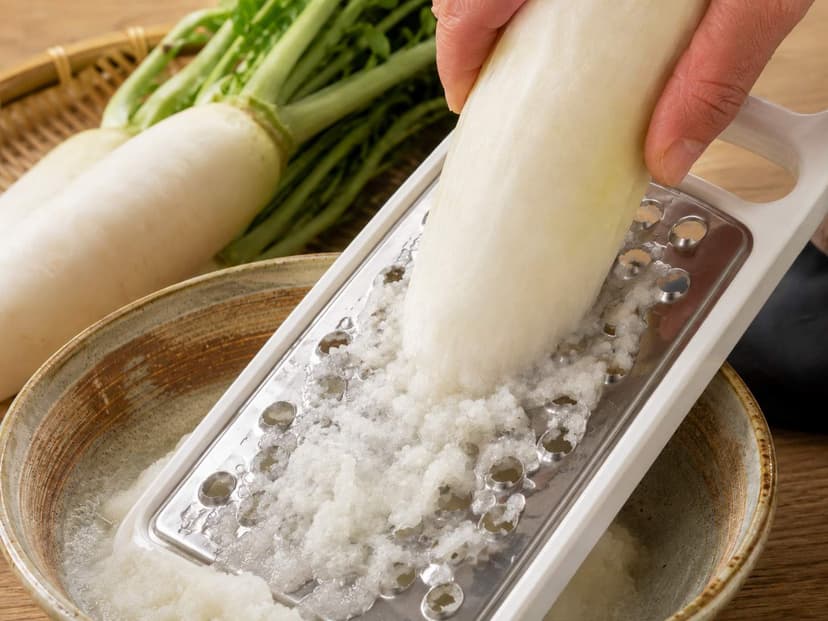
The plastic-framed kind, with a metal plate and a tray that catches the liquid
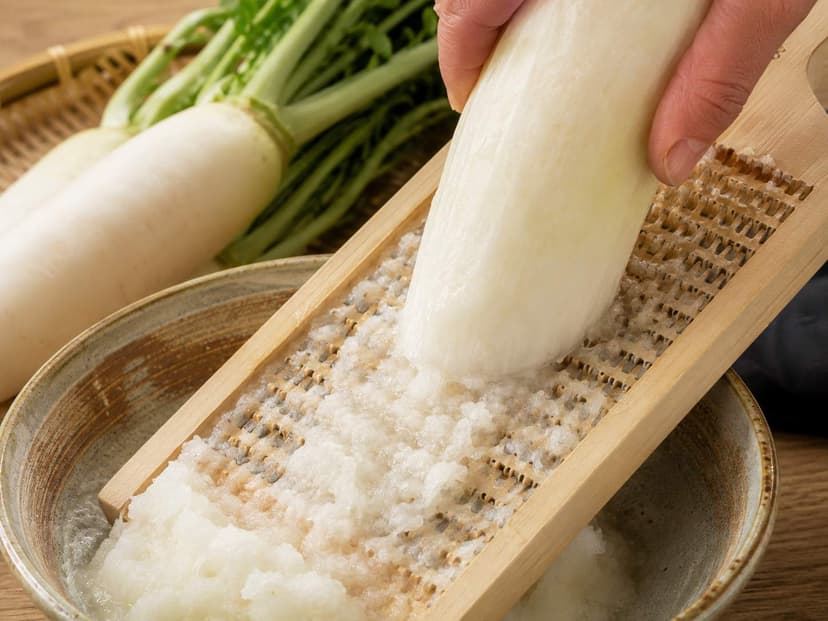
The wooden kind, which does the same job
These two are AI-generated images rather than photographs, and the teeth and the texture did not come out quite right. The shape is close enough, so showing one to a member of staff and asking whether they have it will get you there faster than the word will.
Or skip the sauce and use salt, which is how tempura is often served anyway. Spend a little on it: rock salt or another good salt is worth the difference, because cheap table salt changes how the tempura tastes more than you would expect.
What to ask before you order
Tempura is the dish where the second question matters more than the first, and where most people only think to ask the first.
天ぷらの衣は小麦粉ですか?
揚げ油は、小麦粉やパン粉を使った揚げ物と同じ油ですか?
天つゆではなく、塩でいただけますか?
What each line says:
- Is the tempura batter made with wheat flour?
- Is the frying oil the same oil used for food coated in wheat flour or breadcrumbs?
- Could I have salt instead of the dipping sauce?
Read aloud, roughly:
Tempura no koromo wa komugiko desu ka?
Ageabura wa, komugiko ya panko o tsukatta agemono to onaji abura desu ka?
Tentsuyu de wa naku, shio de itadakemasu ka?
The second question is the one that decides it. A kitchen can offer you a rice flour batter and still fry it in the same oil as everything else, and that is not a distinction most staff will volunteer unless you ask for it directly.
The third is an ordinary request rather than a special one. Salt is a standard way to eat good tempura, so nobody will find it strange.
The short version
Tempura is a wheat coating around food that was already fine, fried in oil that has usually had wheat in it, served with a sauce built on wheat-brewed soy sauce. Asking for salt fixes the sauce. Asking for rice flour fixes the batter. Neither fixes the oil, and the oil is what decides it.
The good news, and there is some, is that this is one of the dishes where a genuinely gluten-free restaurant exists in Tokyo, and where the home version is easy and honestly better than a compromise.
For the places in Tokyo we have visited and checked ourselves, see the Gluten-Free Tokyo Planning Guide.
This article describes what goes into tempura in Japan and how to make a wheat-free version at home, written in a house where one of us has a mild wheat allergy rather than celiac disease. It is a record of our experience and our reading of ingredients, not medical advice or a safety guarantee. Recipes and restaurant practices vary, so always read the label and confirm directly with the restaurant. Restaurant information is current as of August 2026.